Instituto Juruá
Much of the Amazon’s destruction comes from people simply trying to earn a living.
The Idea
Market-Driven Community Conservation
Fellow
Joao Campos-Silva
Mulago Lead
s


Total Investment
1700000
Grants
0
Equity/SAFE
0
Debt/Convertible Debt
Funded Since
2019
Geography
Sector
Structure
The Mission
Protect Amazonian ecosystems.
How It Works
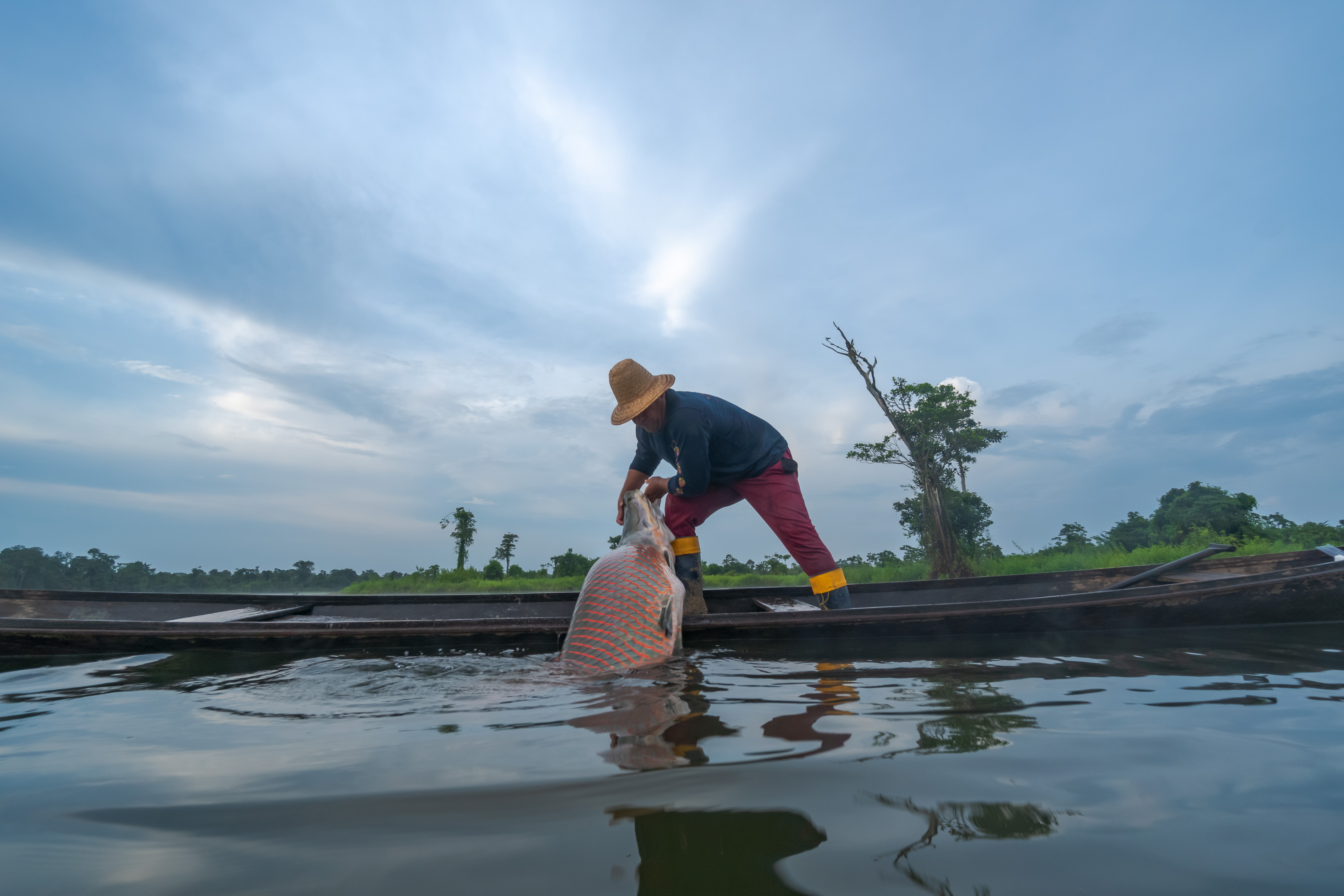
Instituto Juruá works with communities dependent on arapaima, a culturally and commercially valuable fish that exists across the Amazon. Their replicable process for fishing agreements creates protection areas for breeding and aligns all community members around harvest quotas and profit sharing.
The Dream
Communities in the Amazon make good money in a way that directly protects ecosystems.
Why We're In
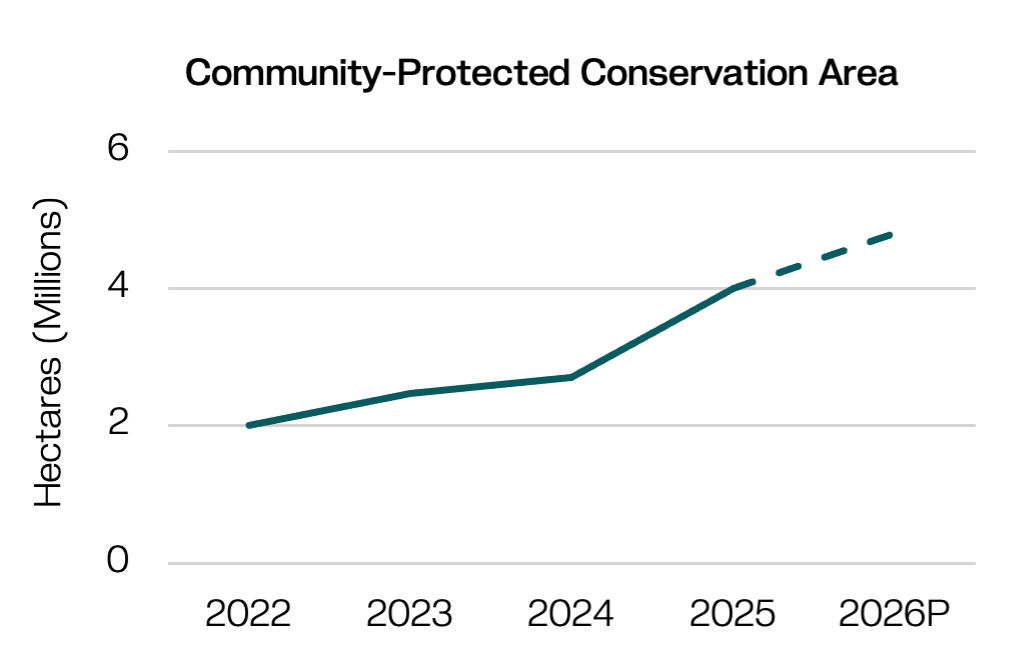
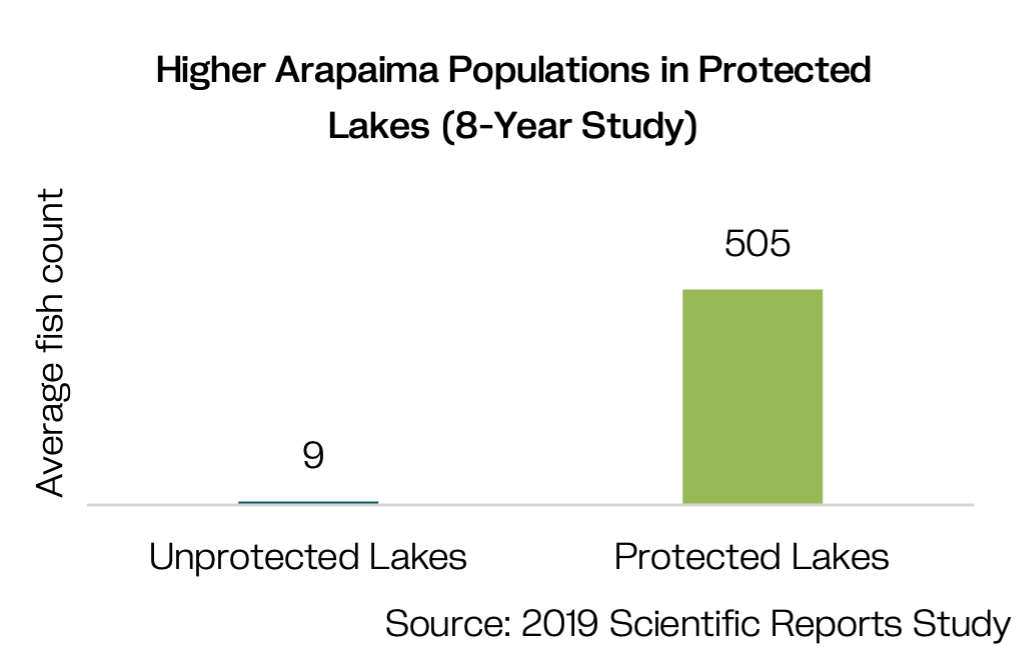
They’ve created fishing agreements covering 4M hectares, resulting in a 55x increase in arapaima and income gains of ~$10.6K per community in average. A recent study shows that protecting a small set of lakes helps safeguard a landscape area 86x larger. This study catalyzed a national financing scheme that could double community income. They’re also strengthening market linkages across Brazil and grew sales from 20 to 95 tons (2022–2024). Importantly, they are replicating their model via 12 NGOs across four large territories, with potential to extend to other species.
The Model
A solution that works and can scale.
Valued Species
Identify a profitable, culturally important species with outsized conservation impact
Conservation Agreements
Community conservation agreements articulating rights, sanctioned by government, and linked to increased economic value (e.g., tenure or harvesting rights)
Focused Training
Monitoring, harvesting, processing, enforcement, and conflict mediation
Access to Big Markets
Marketing efforts and agreements beyond local markets
Potential for Impact at Scale
Mulago uses four criteria to gauge potential for exponential impact. The model must be:
This is about impact and evidence. A landmark 2016 study, that was updated in 2019, found protected lakes had 55x more arapaima than unprotected ones. Over 15 years, internal monitoring shows a 600% increase in arapaima populations, with many other species also multiplying in protected areas. Communities benefit too, earning ~$10.6K more per lake annually from sustainable fishing. Most recently, researchers found that protecting a small set of oxbow lakes along the Juruá River creates spillover effects across the broader ecosystem—effectively safeguarding an area ~86x larger than the lakes—making this the largest community-based conservation model in the Brazilian Amazon.
This is about scope. Every tropical forest ecosystem facing human threats to biodiversity would benefit from this model. The model works best where there is a culturally important species, a functioning market for arapaima or another high-value product, organized communities with governance structures, government commitment to conservation, and some ability to enforce rules against illegal activity. Under those conditions, communities can protect ecosystems while generating livelihoods. Conversely, the model is much harder to scale where powerful corporate or illicit interests dominate landscapes, making it difficult for communities to organize, enforce protections, or build a stable income from sustainable resource management.
This is about whether NGOs can deliver the model. Jurua has replicated the model across 72 communities. Their focus now is to partner with 12 NGOs across four territories to take on the model. Jurua is developing a playbook to help NGOs adapt the model, including establishing rigorous monitoring systems. One major bottleneck is time: it takes ~3 years for communities to establish baseline arapaima counts. But once baselines are set, early pilots show well-selected NGOs can replicate effectively. The biggest constraint is government support—violations remain underreported and weakly enforced. Stronger government partnership is essential to sustain fishing agreements and ensure long-term impact.
This is about what the model costs when delivered by NGOs and communities. Jurua estimates it costs communities $0.95/ha/year, which includes out-of-pocket costs like food and fuel—not labor. When you include wages, the real cost rises to ~$5.30/ha/year using local guard rates, or ~$9.60 under formal government enforcement structures. Even when considering the true cost to communities (inclusive of labor costs), the model remains highly cost-effective given communities are protecting an area ~86x larger than what they directly protect. This is why additional financing, like payment for ecosystem services, is critical—it complements income earned from arapaima sales and covers the true cost to sustain the model long-term.
.png)
Instituto Juruá is in late late Growth stage, connecting community fisheries to national markets and rapidly replicating their model via other NGOs.
Our Take
Jurua has world-class evidence showing this model improves ecosystem health and has implemented it across the Jurua River basin. Their success has sparked strong interest from NGOs and the national government. They are still testing what it takes for NGOs to replicate the model independently and adapt it to other high-value products, but early pilots with 12 NGOs show promising traction. While the model is inherently low-cost, covering its true cost likely requires blended income—both from arapaima sales and market-based financing, such as government-backed payment for ecosystem services—to ensure communities can sustain and scale protection efforts long-term.
Are you a serious funder and want to learn more?
This is just a snapshot of what we know about the organization. If you're an investor or funder that might send some serious dough their way, we're always delighted to share more. Reach out and we'll connect you with the right person on our team.
*this is not monitored for funding requests.