Planet Indonesia
A tide of deforestation is washing over Indonesia, driven by mining, logging, and palm oil. Given the right tools, local communities can resist it.
The Idea
Community-led Conservation
Fellow
Adam Miller
Mulago Lead
s
Total Investment
1100000
Grants
0
Equity/SAFE
0
Debt/Convertible Debt
Funded Since
2022
Geography
Sector
Structure
The Mission
Healthy tropical ecosystems.
How It Works
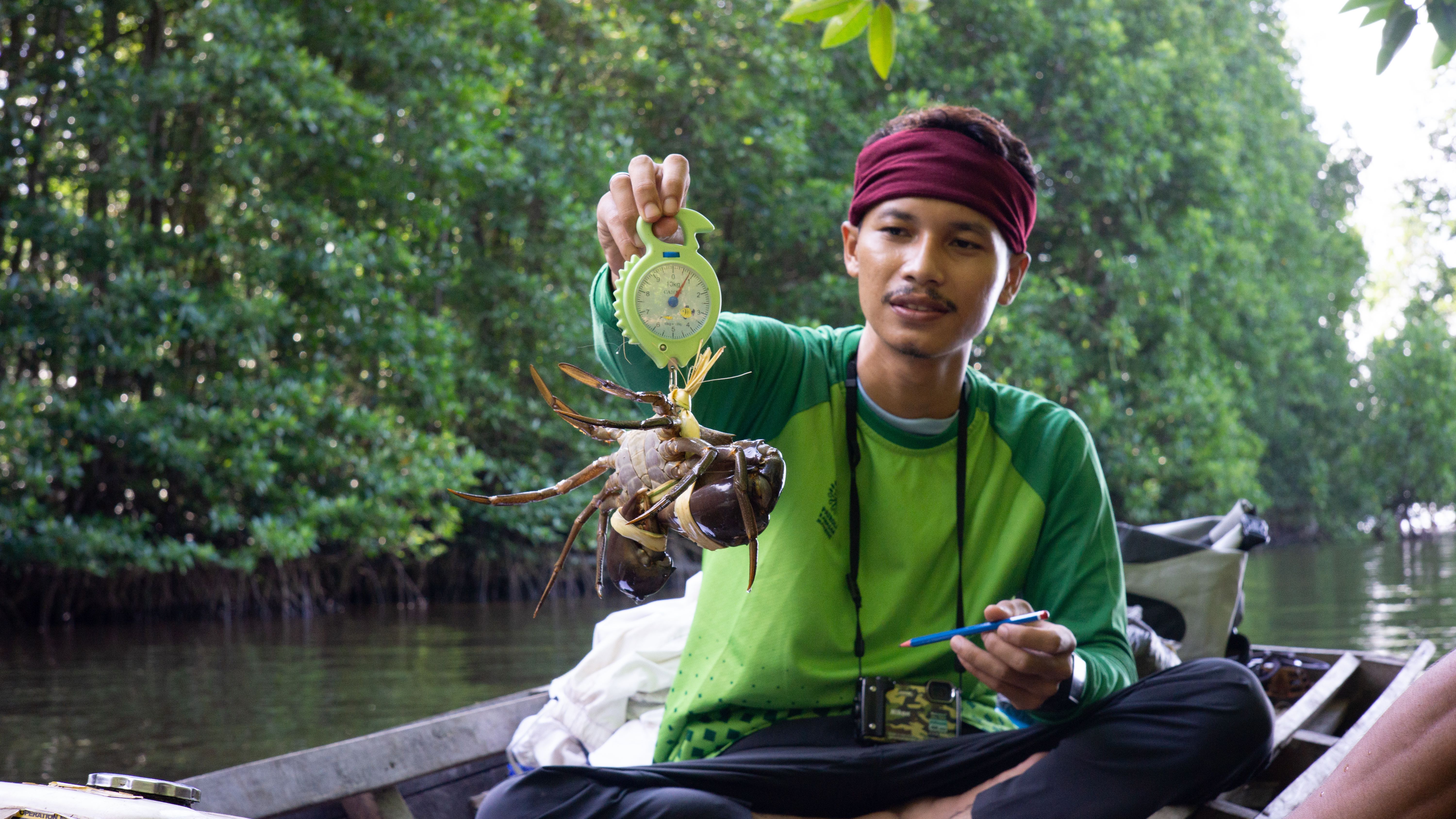
Planet Indonesia provides communities with the tools, skills, and incentives to manage common resources to the benefit of all. They begin by addressing the universal need to improve livelihoods through savings and loans groups. This also strengthens governance, as participation in savings and loan groups is contingent on participation in governance. The result is a stronger community that can fend for itself and take care of its territory.
The Dream
Thriving communities that govern and sustainably manage millions of hectares of tropical forests and marine ecosystems.
Why We're In
Planet Indonesia combines excellent science, deep-rooted community experience, and a systematic, replicable model. Their own results are impressive, but even more promising is the replication of their model through NGO partners. This is—sadly—unusual in the world of conservation, and they have become an important exemplar with real prospects of scale.
The Model
A solution that works and can scale.
Rights
Assure communities’ formal legal tenure and rights over land and resources.
Governance
Create strong local environmental governance institutions.
Protection & Plan
Design and iteration of resource use and protection plans, including community-led patrols that document illegal activity and report to authorities.
Financial Security
Savings and loans groups that encourage community participation, and seed income generating businesses.
Potential for Impact at Scale
Mulago uses four criteria to gauge potential for exponential impact. The model must be:
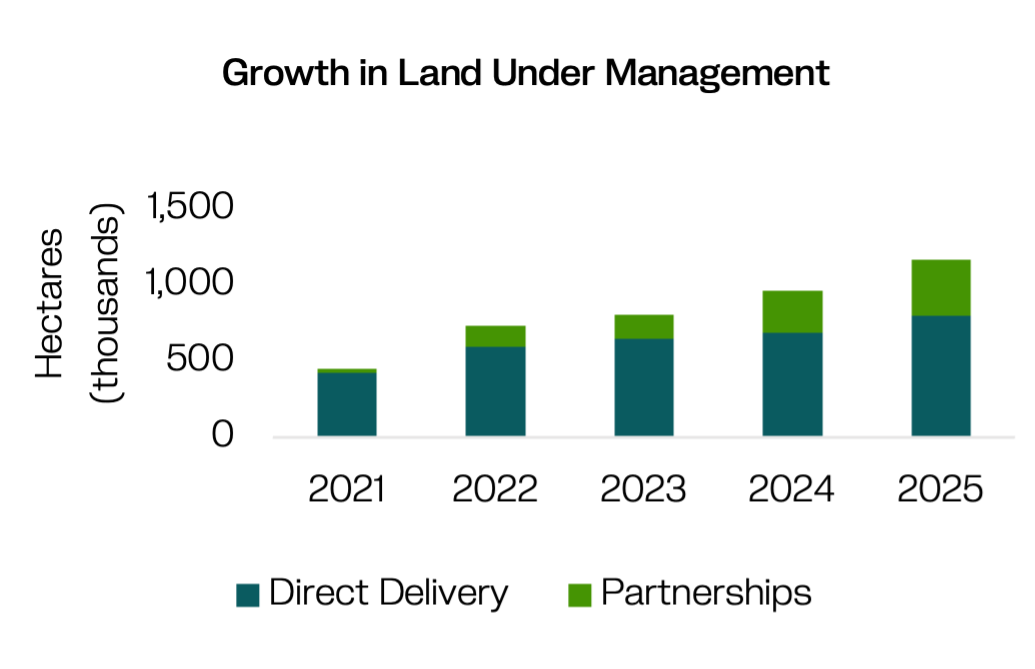
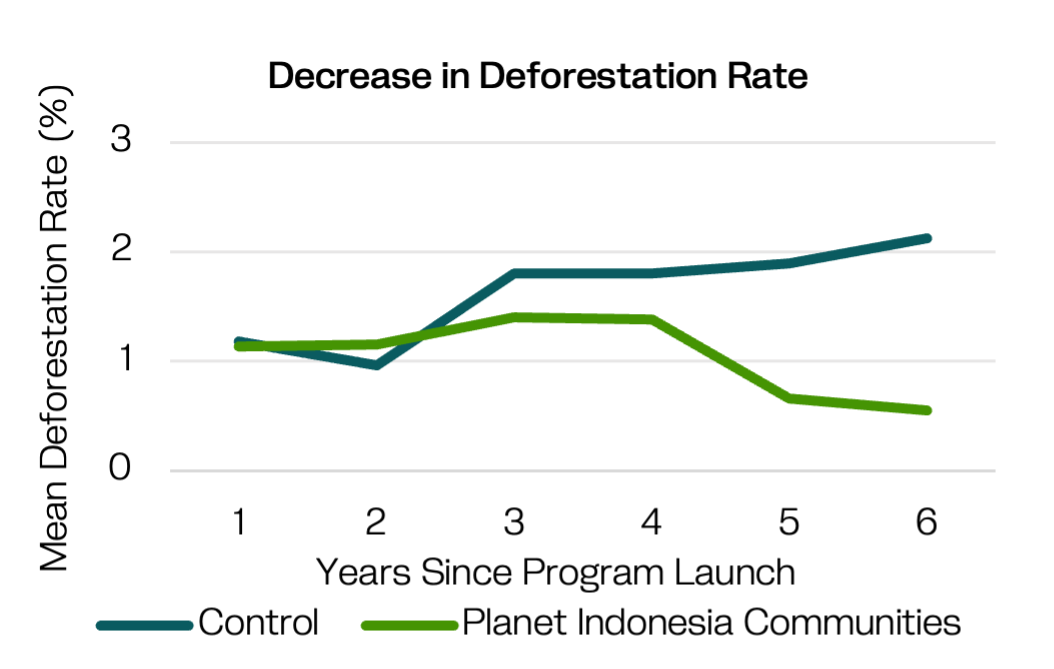
This is about impact. In their direct delivery sites, they see reductions of 60-80% in illegal activities (logging, poaching, deforestation) within community-managed areas over a three-year period. This comes from internal data of their patrols, which report near-real-time data back to Planet Indonesia and cover 70% of the area in which they work. A new study showed an 165% reduction in deforestation rates in treatment sites compared to control sites over a 6 year period. They also have quality evidence linking improved financial well-being and governance with improved environmental outcomes.
This is about scope. There are 26 million hectares of forest and marine areas in Indonesia that should be protected but have low to no management – an area 2/3 the size of California. There are millions more outside of Indonesia with similar characteristics (Pacific islands, SE Asia, etc). There is an additional 19 million hectares in Indonesia that have been designated to be returned to communities, but to date, only 1.2 million has transferred. The model works best where there are local NGOs that can partner with communities, which includes much of Indonesia but might be harder in more remote communities.
This is about whether other NGOs can efectively deliver the model at big scale. Planet Indonesia replicated the solution across marine, terrestrial, and varied geographies across Kalimantan. It’s been pared down over time to focus on environmental governance as a primary focus, with financial inclusion being a ‘hook’ for communities. They’ve delivered through other NGOs on different islands for nearly two years now and are seeing promising results, though some smaller NGOs struggle delivering certain parts of the model.
This is about cost. Right now, the cost for delivery is mainly for staff and partner NGO time, with some physical equipment required for the SMART patrol training. The savings and loans groups are quite cheap, as Planet Indonesia only provides a small seed grant of a few hundred dollars to communities to get started.

Planet Indonesia is nearing the Big Shift – they have great evidence, continue to add more rigorous studies, and are starting to lead the field in innovative environmental research.
Our Take
Planet Indonesia are honing the model to be delivered by other NGOs, and have a few years of solid track record of partner replication – and some evidence showing impact when partners deliver the model. They have more data showing cost when other NGOs deliver the model, but are still working out an optimal cost model. They’re in a promising moment preparing for scale – a new Indonesian coalition of community conservation orgs should help push things forward as well.
Are you a serious funder and want to learn more?
This is just a snapshot of what we know about the organization. If you're an investor or funder that might send some serious dough their way, we're always delighted to share more. Reach out and we'll connect you with the right person on our team.
*this is not monitored for funding requests.