Farmers for Forests
Conventional farming has led to degraded soils, depleted water tables, and plummeting biodiversity in India. Good agroforestry can reverse it, but it’s hard for smallholder farmers to make the change.
The Idea
Carbon-Financed Agroforestry
Fellow

Krutika Ravishankar
Mulago Lead
s



Total Investment
600000
Grants
0
Equity/SAFE
0
Debt/Convertible Debt
Funded Since
2023
Geography
Sector
Structure
The Mission
Restore biodiversity on farmland.
How It Works
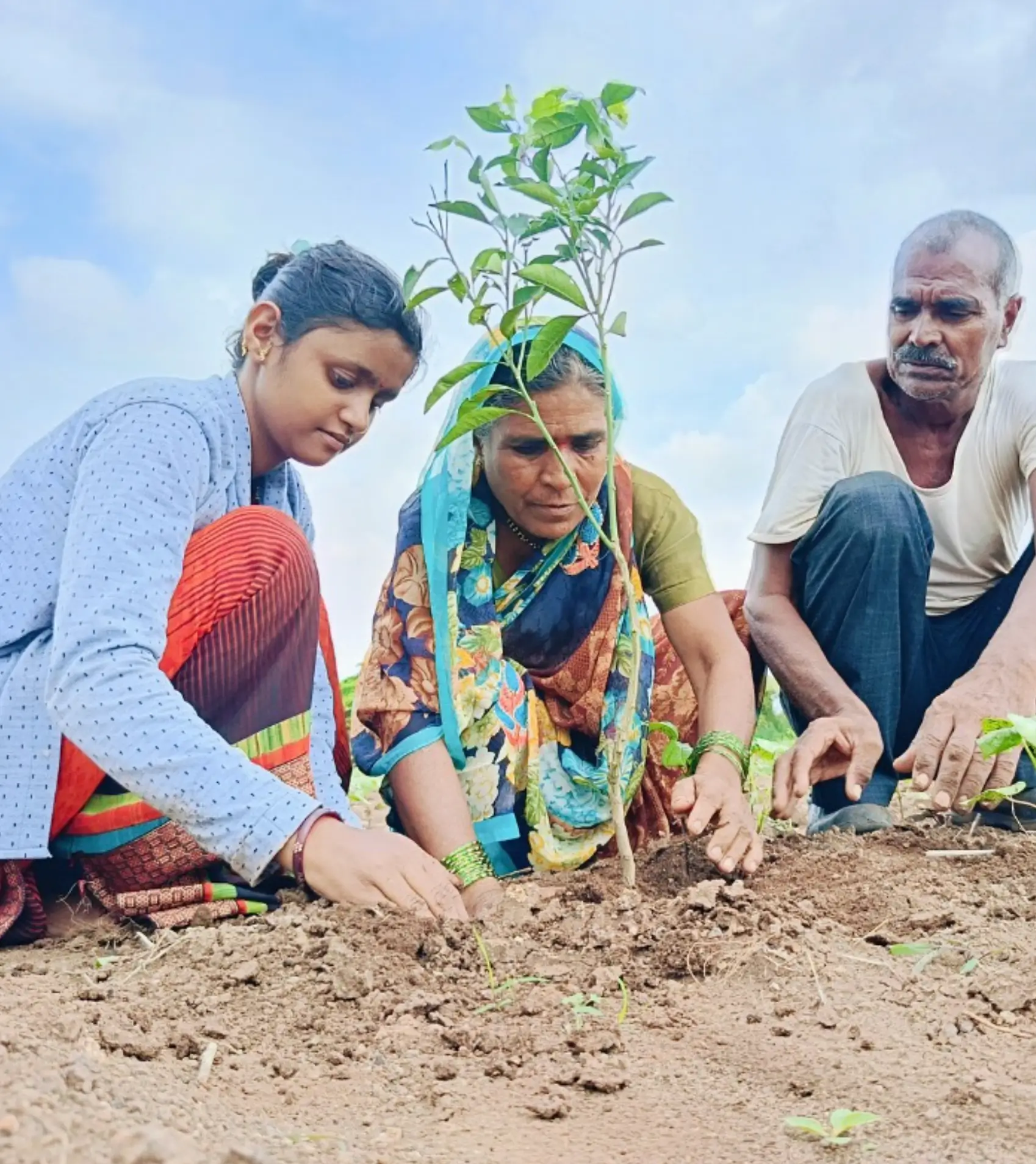
Farmers for Forests (F4F) helps farmers switch to agroforestry by using carbon finance to front the cost. They source native trees, distribute them to farmers, and provide advisory services. Drones and AI-powered analytics allow them to monitor the growth of young trees and verify carbon sequestration for payments to F4F and farmers.
The Dream
Biodiverse agroforestry is the norm for India’s smallholders, with businesses enabled by an industry supercharged by premium carbon credits.
Why We're In
F4F is a startup with good momentum. Their impact on farmer income is promising even before carbon money flows in. They have a brilliant team with a strong culture of iteration that’s innovating on tough logistics to get seedlings to farmers and inching closer to securing a big carbon buyer. Their cutting-edge tech brings unique value in ensuring these are quality carbon projects. This company has a shot at making biodiversity restoration profitable at scale.
The Model
A solution that works and can scale.
Right Trees
Source native trees with the greatest benefits for biodiversity and profit (need existing market).
Farm Inputs
Recruit and train the best smallholder farmers mostly in-person and increasingly via WhatsApp, and sell inputs directly to farmers (saplings, drip irrigation) for ~$250-$500 / hectare.
Cash Transfers
Confirm tree survival and pay farmers a nominal amount annually (~$50/year/hectare) to conserve their trees until the produce is ready for the market in 4 years.
Market Access
Connect farmers to local markets to sell premium non-timber and timber products.
Remote Monitoring
Use AI-powered platform to analyze drone imagery and confirm tree growth for future carbon payments to farmers.
Potential for Impact at Scale
Mulago uses four criteria to gauge potential for exponential impact. The model must be:
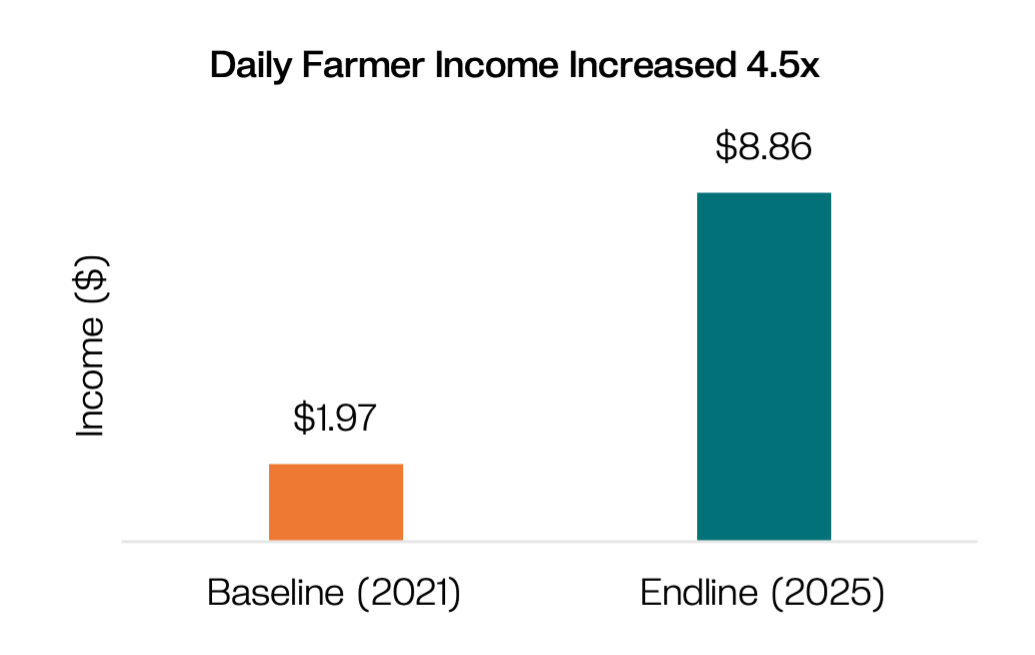
This is about impact and evidence. F4F maintains a 75% tree survival rate and 4x increase in species from a baseline of 1-2 trees, flora, and bacterial varieties . Farmers self-report income gains from ~$2/day to $9/day after 3-4 years from fruit and bamboo sales (vs. household income of ~$5/day ). More rigorous studies with a comparison group are underway to make a stronger case for impact on farmers and biodiversity.
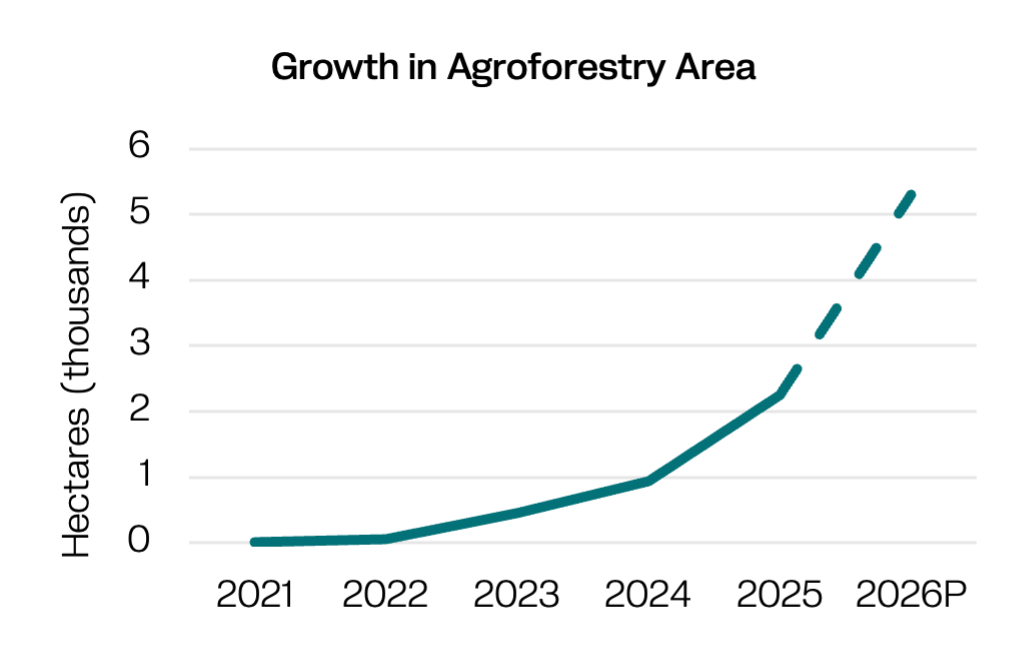
This is about scope. At 180M hectares, India has the most ag land in the world, at the expense of forests and biodiversity. Of this, F4F sees ~40M hectares (20M smallholders) as where this can likely work . Their constraints include model complexity, market access, and sufficient carbon interest to prefinance the high cost of implementation.
This is about whether businesses can deliver the model. F4F’s takes the classic ag bundle and adds cash transfers, drone monitoring, and carbon finance – it’s complicated but they’ve replicated in multiple regions in India. They don’t yet have other doers due to this complexity but are experimenting with onboarding farmers via other doers and selling their tech to supercharge agroforestry doers.
This is about what the model costs if delivered by businesses and whether customers are willing and able to pay. For F4F, costs per hectare are currently covered by farmers (nominally) and mostly philanthropy. They're seeking significant carbon deals to make this a profitable case for other doers. Negotiations with big buyers are slow, but they've closed smaller deals to date.
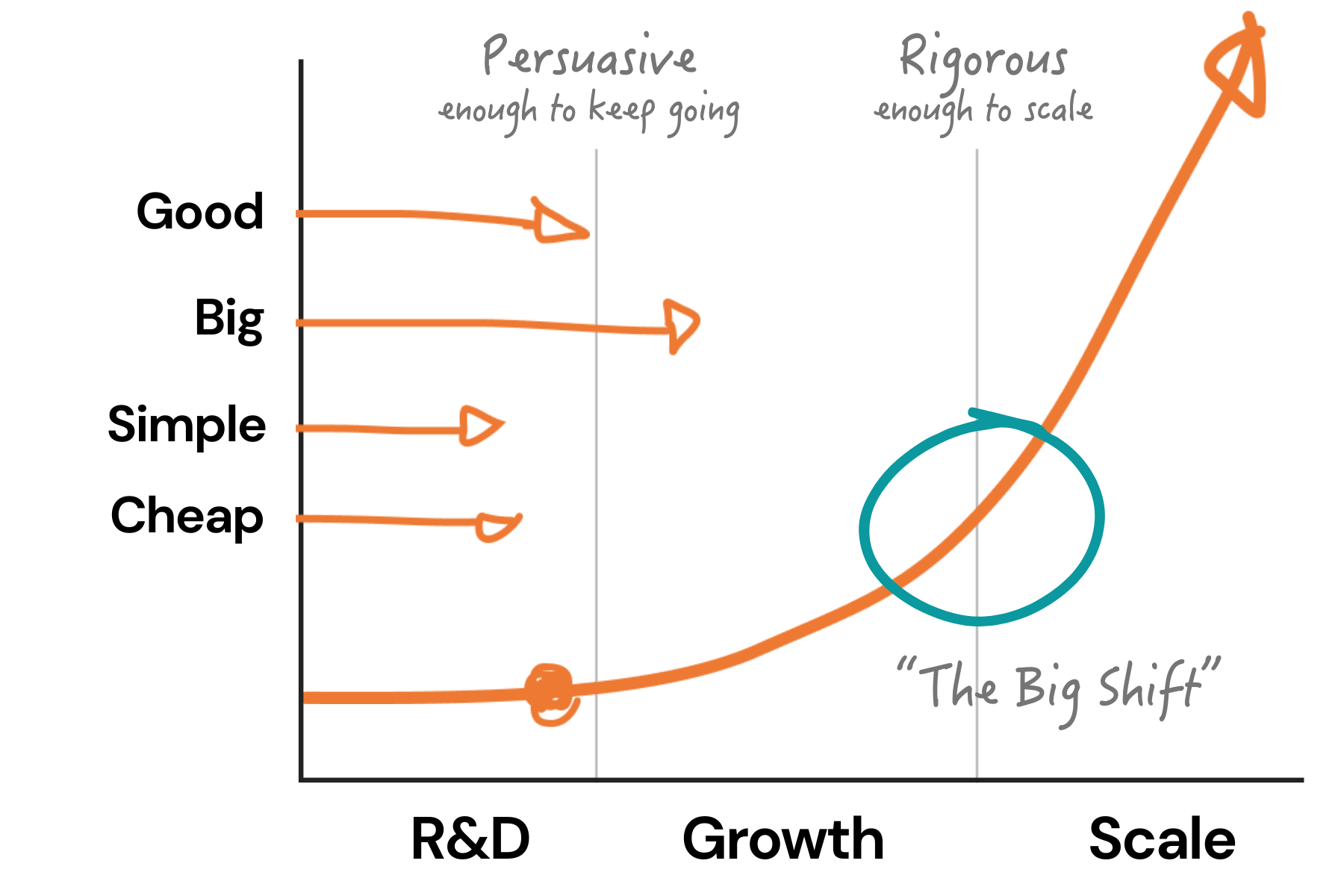
It’s still early days for F4F and they are still honing the model.
Our Take
They don’t yet have the rigorous impact on farmers and biodiversity needed to scale. What we know so far is promising and more rigorous studies are ongoing. Their bigger challenge is landing on something that’s affordable for farmers and simple enough for other doers. The breakthrough is a big carbon deal which isn’t easy – they’re still in negotiations with big buyers in this space. That can unlock lower input costs for farmers and a profitable enough model for other doers to copy.
Are you a serious funder and want to learn more?
This is just a snapshot of what we know about the organization. If you're an investor or funder that might send some serious dough their way, we're always delighted to share more. Reach out and we'll connect you with the right person on our team.
*this is not monitored for funding requests.