Tanganyika Blue
Farming invasive fish has ruined most of Africa’s Great Lakes. Lake Tanganyika—the world’s second biggest lake by volume—remains relatively pristine, but the threat of invasive fish farming is imminent.
The Idea
Native Species Aquaculture
Fellow

Alex Chetkovich
Mulago Lead
s



Total Investment
600000
Grants
0
Equity/SAFE
0
Debt/Convertible Debt
Funded Since
2023
Geography
Sector
Structure
The Mission
Protect aquatic ecosystems.
How It Works
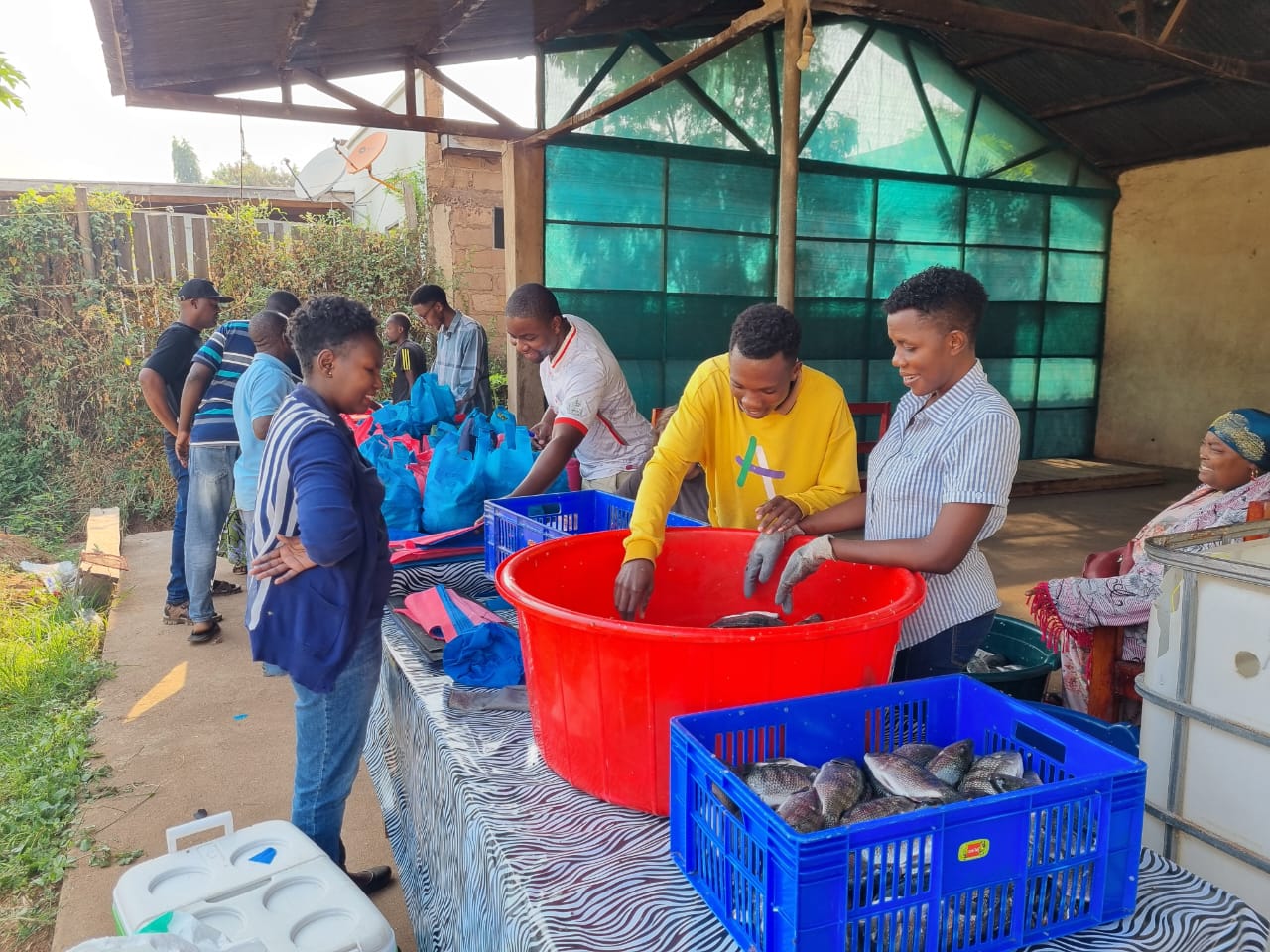
Tanganyika Blue protects native species by—ironically—showing that native fish aquaculture is profitable and doesn’t destroy the lake. Like it or not, fish farming is coming, and as first mover, they have a chance to establish native species aquaculture as the norm. Their scale plans include selling baby fish and feed to local farmers — they're betting the farm that native species will be more profitable for local farmers than invasive species.
The Dream
A thriving native aquaculture industry that supercedes business-as-usual across Africa.
Why We're In
The theory of change is compelling: build a profitable business and supply chain of native species before invasive species farming takes root. They need strong regulatory enforcement to keep out lower cost invasive competitors. The team is excellent and making steady operational progress. This is a high-upside biodiversity play in a sector that rarely sees win-wins.
The Model
A solution that works and can scale.
The right species
Select native fish, and breed them to grow fat, fast.
Best-in-class farming
Adapt the best of existing aquaculture methods, with a focus on securing cheap and reliable inputs (fish food).
Robust markets
Build linkages in the most promising regional, national and potentially international markets.
Local producer support
Train and provide inputs to help local smallholders to farm native fish.
Potential for Impact at Scale
Mulago uses four criteria to gauge potential for exponential impact. The model must be:
This is about impact. It’s early. The theory is sound - if they help native species aquaculture take off in the lake, it will crowd out invasive species and prevent a massive drop in biodiversity, which has happened in other big lakes nearby (Lake Victoria). A current study with The Nature Conservancy concluded baseline measurements; the endline in 2026 will provide robust data on biodiversity levels around the fish farm.
This is about scope. This can technically work anywhere aquaculture is currently practiced, meaning most water bodies across the world. The specific species of native fish they grow and harvest are well suited for at least Lake Tanganyika and Lake Malawi, the second and fourth largest lakes in the world. These two lakes both have endemic species of tilapia and combined are home to as many as 800 endemic freshwater fish species (for reference - the entire US only has 664 endemic species). The model is limited by needing access to a market with a fish supply chain (ice, trucks, and consumer demand), and aquaculture talent (which is a specialized skill).
Overall, Tanganyika Blue’s total addressable market is $13bn (the global tilapia market), and their immediately serviceable addressable market is $120M, the regional tilapia market.
This is about whether other businesses can replicate their model. They are still in R&D and proving out a core model that works – they are doing all the pieces, and likely doing a lot more than they should be at scale (building a local market for native species, training out-grower farmers, etc). They have a lab size facility to grow and breed fish; the next step is expanding and running a factory size facility, which will require a step-change in managing operations.
This is about cost. The main cost driver is fish feed, and cost metric is economic feed conversion ratio (how efficient they can turn money spent on feed into kg of fish). They still import feed, but not at volumes that could save costs (no payment terms, mixed or partial rather than full containers etc). Current costs also reflect first generation fish so the Feed Conversion Ratio (FCR) is theoretical highest, thus most expensive. Their gross margin in Q2 2025 was 22%.
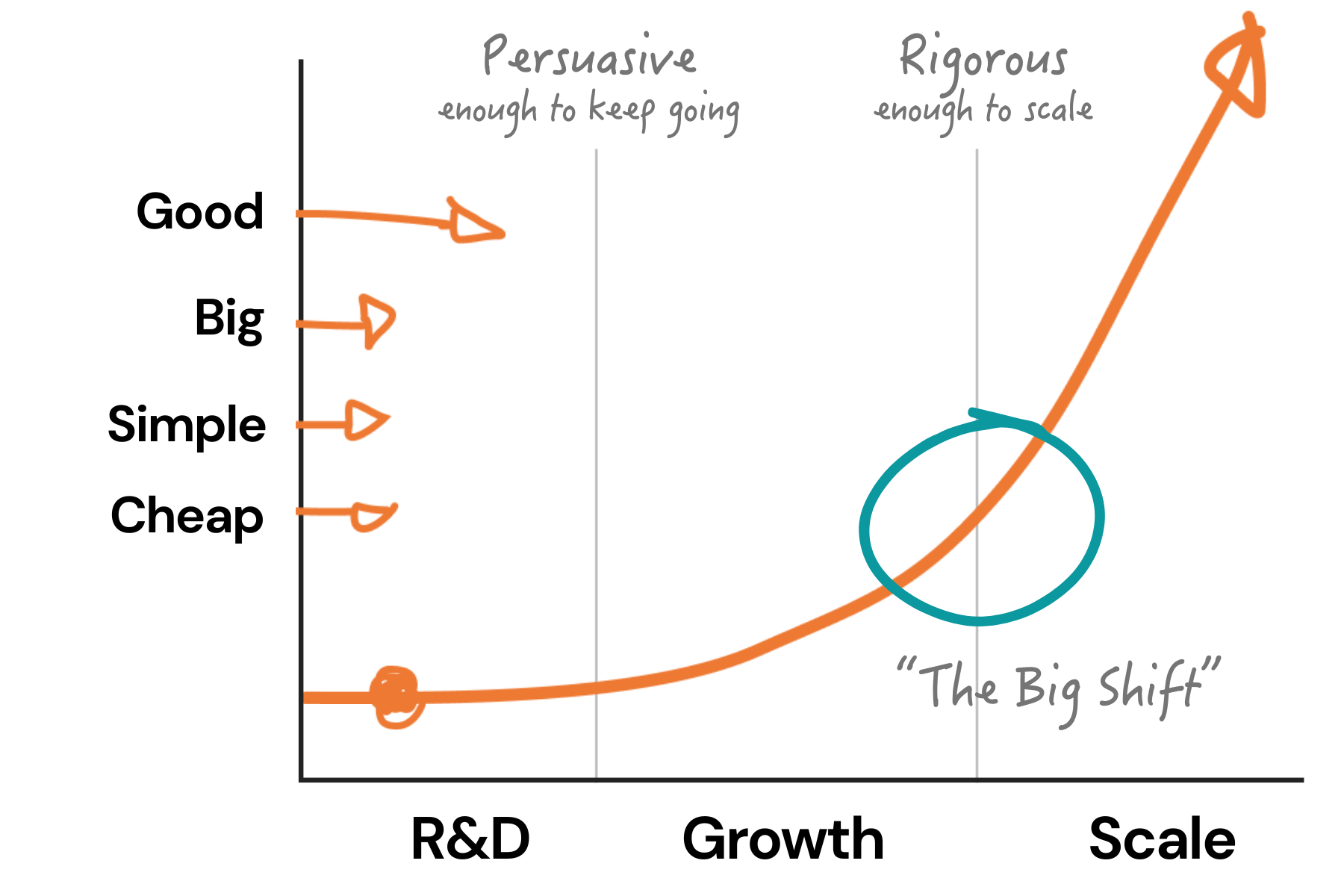
Tangayika Blue are in R&D and the organization is right around where it should be for an early-stage venture.
Our Take
Their theory of impact is solid (native fish farming protects biodiversity compared to invasive species farming), and they have a third-party study underway that could prove biodiversity gains. They haven’t reached enough volume yet to prove if the market exists or if farmers will make more money, and they’re still doing everything themselves. A bit more time will tell if they get the model simple and cheap enough to actually get small farmers to grow and sell native species on their own.
Are you a serious funder and want to learn more?
This is just a snapshot of what we know about the organization. If you're an investor or funder that might send some serious dough their way, we're always delighted to share more. Reach out and we'll connect you with the right person on our team.
*this is not monitored for funding requests.
.jpeg)