Pinky Promise
Most women in India will never be able to see a gynecologist. There are 360M women of reproductive age and only 70K registered gynecologists, of whom ~90% practice in big, urban areas.
The Idea
AI-powered, On-demand Women’s Health Care
Fellow

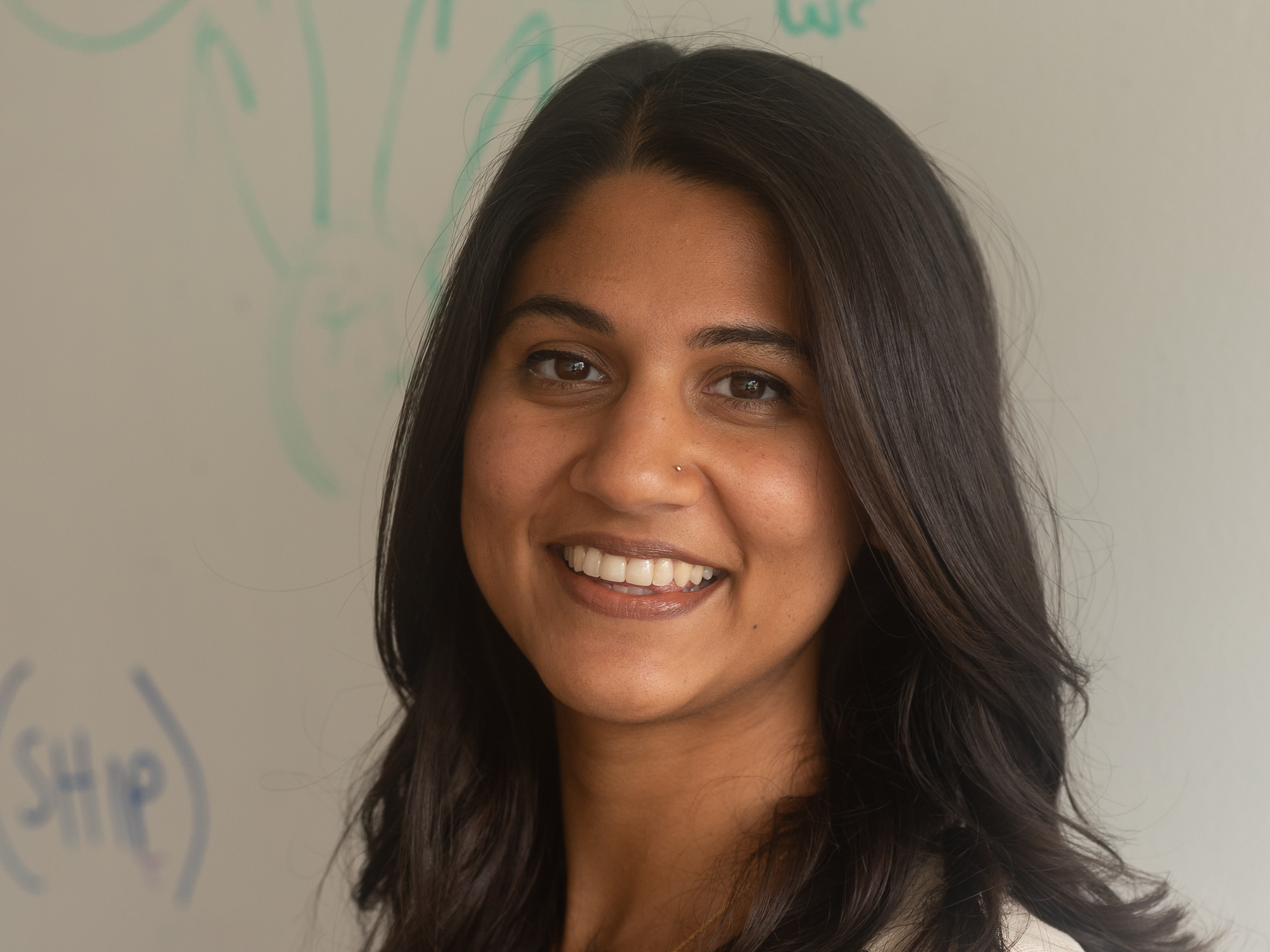
Divya Kamerkar
Mulago Lead
s



Total Investment
600000
Grants
0
Equity/SAFE
0
Debt/Convertible Debt
Funded Since
2023
Geography
Sector
Structure
The Mission
Healthy women everywhere.
How It Works
Pinky Promise’s AI-powered app gives women instant access to private, high-quality gynecological care. A chatbot gathers symptoms and medical history, then generates a diagnosis and treatment plan for a provider to review and approve. When needed, patients move from chatbot to video consult to in-person referral, with prescriptions and labs arranged. Chat-based follow-ups ensure they stick to treatment.
The Dream
All women in India can instantly access and afford high-quality gynecological care through Pinky Promise—and, over time, a broader market of similar AI-powered, app-based providers.
Why We're In
Pinky Promise is changing the paradigm for women’s healthcare in India. They’ve trained their English model in Hindi to expand their reach to more low-income women and prove out this strategy as a credible pathway to profitability. They've been able to address ~83% of all acute sexual and reproductive health (SRH) issues on their app. And, they've had fast, organic growth—women love the platform. They’ve got a rockstar team and incredible CEO who we’re betting will take this big.
Delivery
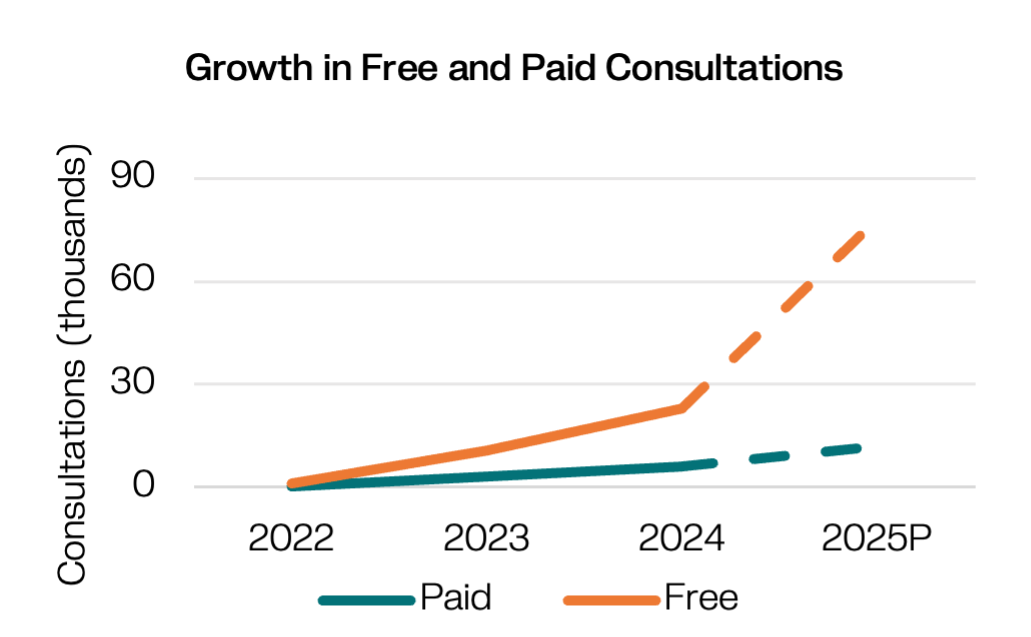
Pinky Promise has been working on getting product-market fit and growth has been organic, largely through word-of-mouth. Now that they have a stable product and targeted marketing strategies, their user base is projected to grow exponentially.
The Model
A solution that works and can scale.
Digital Consults
Phone and web-based app with smart chatbot to take symptoms and medical history.
AI-Assisted Providers
Doctor reviews, corrects, and approves AI-generated diagnosis and treatment plan.
Prescription and Lab Orders
Patients get prescriptions and lab orders when necessary.
Care Progression
Patients can go from chatbot to video consult to in-person referral as needed.
Follow-up
Chat-based follow up with provider to ensure treatment adherence and ongoing patient support.
Potential for Impact at Scale
Mulago uses four criteria to gauge potential for exponential impact. The model must be:
This is about impact. Pinky Promise has self-reported data from users that shows ~83% of health issues are resolved, but they know they need more rigorous evidence. They starting a study with Emory University to evaluate the quality of diagnosis delivered by their platform, with results expected in March of 2026. They will also conduct a study to investigate adherence rates and patient behavior for Pinky Promise compared with standard in-person care. Pinky Promise is building a body of evidence to test their hypothesis that access to high-quality and supportive healthcare leads to good adherence rates and improved health outcomes.
This is about scope. There is huge need for women’s health care across India. For Pinky Promise to meet this need, women need access to phones, some basic tech literacy, and a link to in-person care for medications, labs, and/or other exams. Right now, Pinky Promise works well for addressing most SRH issues for the urban poor. As they scale and reach more poor women, particularly in rural areas, and work to address more complex health issues, they will need to keep iterating on their tech features and linkages to in-person care.
This is about use and administration. Tech solutions can scale fast because they don’t require much behavior change—most women already Google their medical questions. Pinky Promise helps patients get accurate answers to their medical questions with the click of a few buttons, and doctors can “see” over 250 patients daily, a number that will only go up with their new AI co-pilot that manages follow-ups for doctors. Pinky Promise is also exploring ways to close the care loop directly, either through partnerships or their own “Pinky Promise” clinics. While vital for impact, getting into direct delivery will make things less simple too.
This is about the cost of the product. Pinky Promise offers very cheap services: free for initial questions and $1.20 for diagnosis and treatment plan, plus a 24-window to keep talking to the doctor. This is 10% the market price of a standard gynecologist visit in India, and only costs Pinky Promise $0.04 per consult. With most major upfront investments in the tech complete, expenses should decrease going forward. Reaching low-income women in rural places will likely require additional features (Interactive Voice Response, voice notes) and tailored approaches, so Pinky Promise will need to think more about LTV:CAC ratio for its different customer profiles and what this implies for profitability.
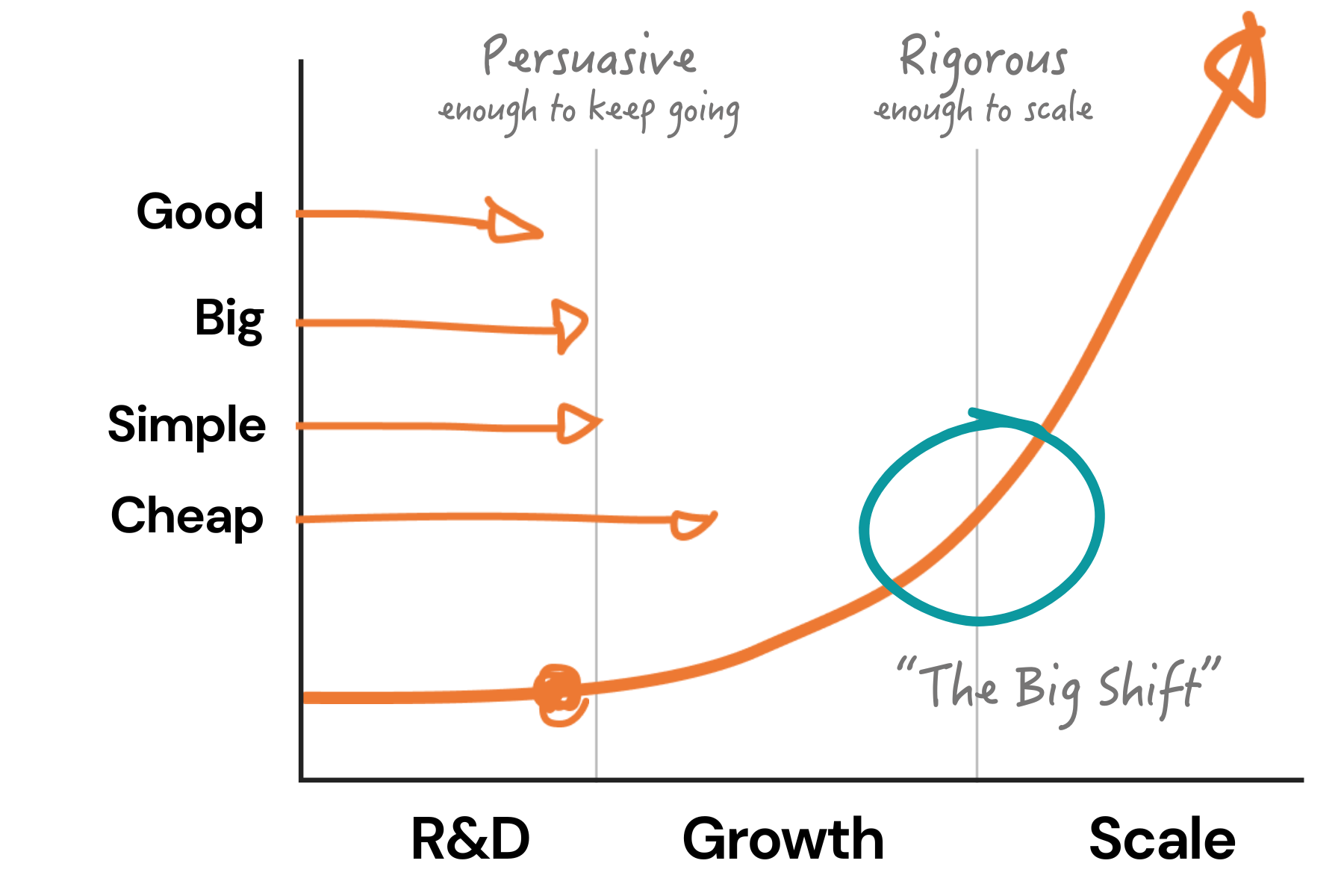
Still in R&D, Pinky Promise has an impressive platform and a growing user base.
Our Take
Pinky Promise still need rigorous evidence around diagnosis quality, patient adherence, and health outcomes. We are eager to see the data as it will start to answer the question of impact for Pinky Promise and could also help build a more rigorous body of evidence for the digital health sector as a whole. Poor women in urban and peri-urban areas are using the app, and Pinky Promise plans to keep iterating to reach rural women. The app is already easy to use for both patients and doctors, and the AI co-pilot feature will make it even easier. The app seems cheap enough for even the poorest women, but the pricing isn’t fully fixed yet. As Pinky Promise adds new features and reaches more women, price points might change.
Are you a serious funder and want to learn more?
This is just a snapshot of what we know about the organization. If you're an investor or funder that might send some serious dough their way, we're always delighted to share more. Reach out and we'll connect you with the right person on our team.
*this is not monitored for funding requests.

.JPG)


.jpeg)