
Growth Teams
GDP per capita in Africa has stagnated over the last decade. Without economic growth that creates formal jobs, millions of young people across Africa are stuck in poverty, and countries cannot prosper.
The Idea
“Growth Teams” in Government
Fellow

Jonathan Mazumdar
Mulago Lead
s




Total Investment
350000
Grants
0
Equity/SAFE
0
Debt/Convertible Debt
Funded Since
2024
Geography
Sector
Structure
The Mission
Create good jobs.
How It Works
Growth Teams finds an ambitious leader in government committed to economic growth. They help that leader assemble allies (the “team”), identify a high-potential industry, figure out what’s holding that industry back, fix the necessary policies, and then attract investment with a targeted game plan—and repeat.
The Dream
Governments have their own growth teams that spur economic growth.
Why We're In
Growth Teams cracked the code to drive economic growth in Rwanda. They took on a decade-long stalled government effort to create a Business Process Outsourcing (BPO) industry, helped them rev it up, and created ~4,000 high-quality jobs in two years. The top three BPO firms are among the largest private employers in Rwanda. They’ve leveraged that success to move into Malawi (a tough one) and Tanzania.
Impact
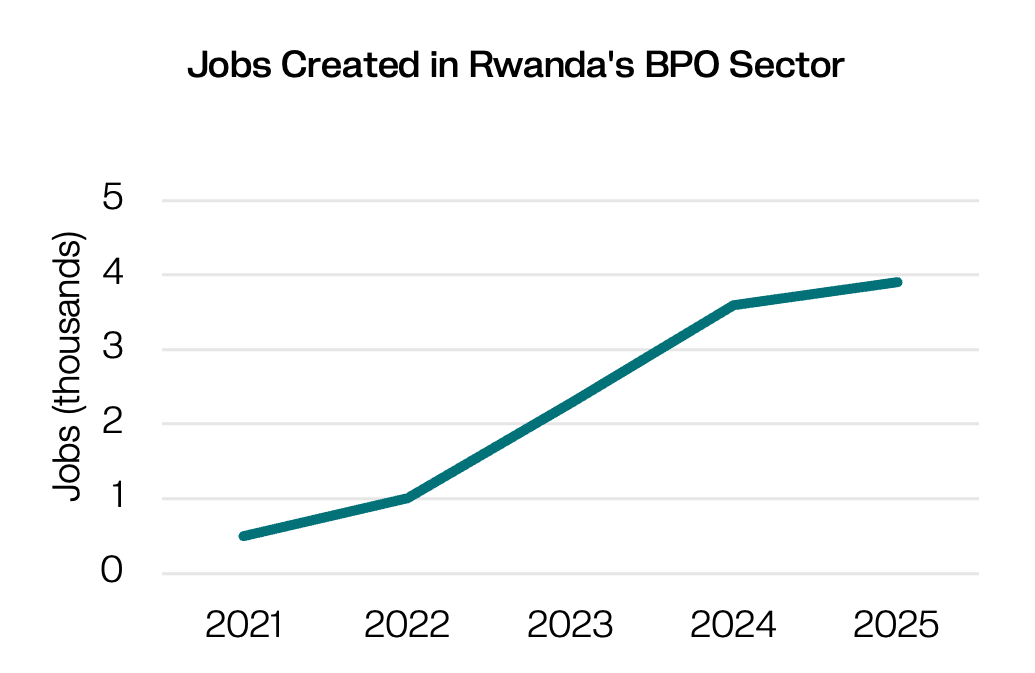
Growth Teams helped Rwanda launch the Business Process Outsourcing industry. BPO firms are the largest private employers in the country.
The Model
A solution that works and can scale.
Form a growth team
Form, manage, and sustain a team comprised of the right government leader and staff dedicated to economic growth and attracting private sector investment
Surface the opportunities
Select high-potential industries which create formal jobs
Figure out the barriers
Identify barriers to private sector investment within those opportunities
Formulate and execute on a gameplan
Develop an investment gameplan– proactively get rid of roadblocks (like onerous regulations or building the right talent pipeline) and creatively incentivize firms to invest (like giving them a special tax cuts or other financial perks).
Potential for Impact at Scale
This is about impact. Growth Teams’ work in Rwanda helped create 2K high-quality, formal jobs (projected to reach 6K). Formal jobs are a key ingredient to a country’s sustained, long-term growth. The companies Growth Teams brought to Rwanda to build out the BPO industry are now some of the largest private employers in the country. These jobs pay starting salaries of $200-400 per month –- 2.5-5X average per capita income – and offer career paths.
This is about scope. Sub-Saharan Africa needs functioning, high-growth industries to break out of economic stagnation. For Growth Teams’ model to work, context matters: countries must be economically connected, politically stable, and not overly dependent on natural resources. A capable policy entrepreneur who can champion industry development is also essential. Growth Teams’ experience working inside governments shows that even in difficult environments, such entrepreneurs typically exist. To reach more of them systematically, Growth Teams is building a strategy to cultivate and connect a cross-country network of policy entrepreneurs. They are also proving their model in varied contexts, including Tanzania and Malawi.
This is about whether governments can replicate the model. Growth Teams’ model is based on approaches developed and successfully piloted by Harvard. They’re taking this proven approach and figuring out how to deliver it consistently and systematically. Their initial success in Rwanda is a promising signal, but now their policy entrepreneur partner in Rwanda must grow the BPO industry and replicate the approach across other high-growth industries on their own. It’s unclear if they can achieve the same success without Growth Teams. As Growth Teams replicates in other countries, they’ll be able to codify their approach into a playbook that can set policy entrepreneurs up for success.
This is about whether governments can pay. Right now, Growth Teams’ delivery of the model is paid for by philanthropy and Big Aid; it’s a fraction of the cost of traditional technical assistance providers. It’s unlikely governments will ever pay Growth Teams directly for this work given the complexities of government procurement practices. However, over the long-run, as policy entrepreneurs and their teams increasingly take up and deliver the model on their own, the additional cost to government is negligible (given policy entrepreneurs and their teams are already employed by the government).
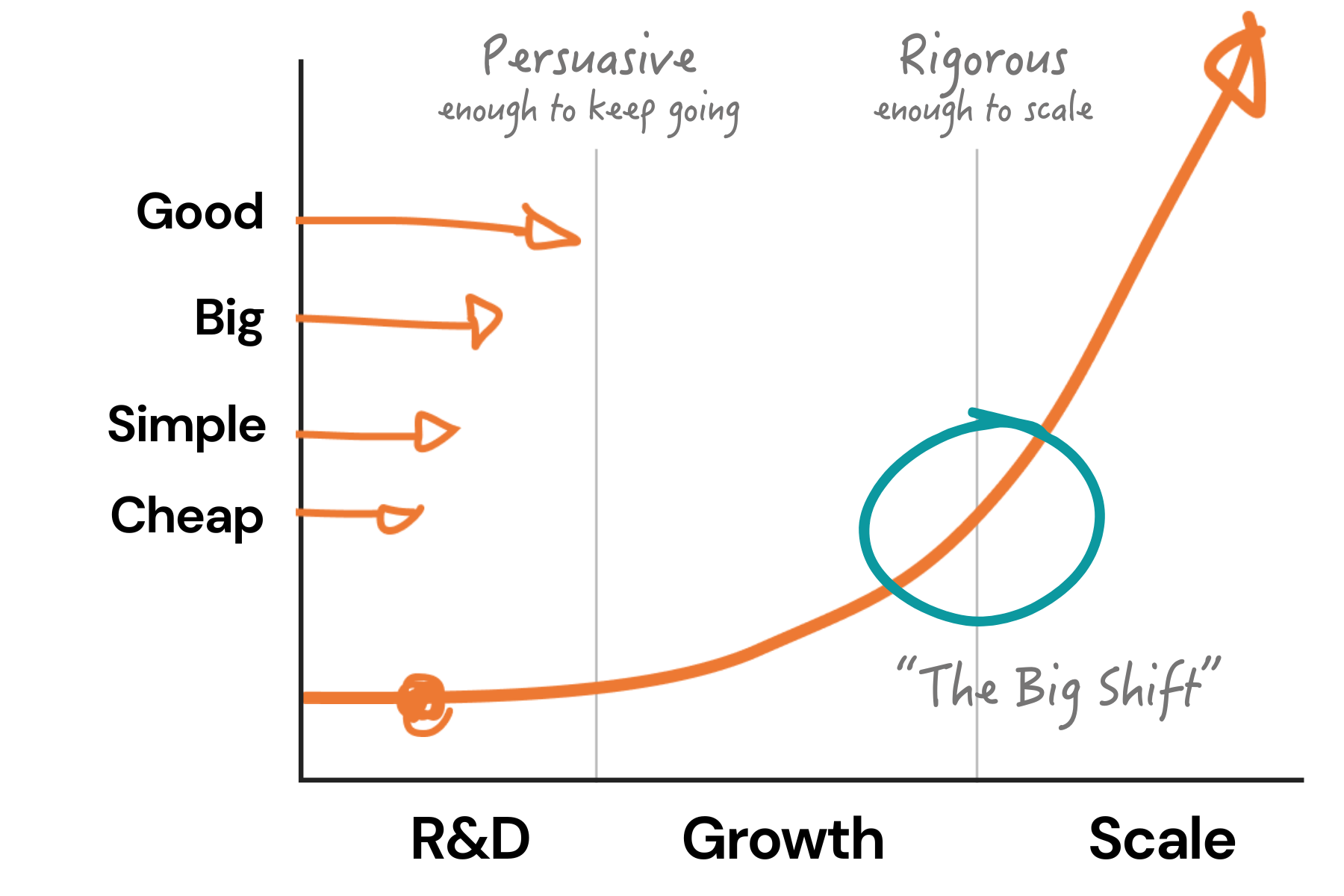
Growth Teams is an early-stage organization. They’ve demonstrated real impact in Rwanda, and it seems like the process could be replicated in other countries.
Our Take
Growth Teams is early, and there are big questions around where this would work and whether policy entrepreneurs can replicate this model on their own in the long-run, but Growth Teams’ replication in Tanzania and Malawi should help clarify those questions. In Tanzania, they’ve helped the government develop a national development strategy and identify opportunities in agro-processing, automotive, and tourism sectors that, if unlocked, could collectively generate an additional $2.5 billion in exports and create 200,000 new good jobs by 2030. In Malawi, they’ve run a series of workshops with the Malawi Investment and Trade Center and identified an opportunity to attract investment to boost exports of alphonso mangoes to India, a $10-15 million opportunity given the high demand there. (Alphonso mangoes grow in Malawi during the off-season in India). There are a lot of countries where this seems plausible. This approach requires little additional expenditure on the part of the government, and the money required for Growth Teams to deploy their model is relatively modest.
Are you a serious funder and want to learn more?
This is just a snapshot of what we know about the organization. If you're an investor or funder that might send some serious dough their way, we're always delighted to share more. Reach out and we'll connect you with the right person on our team.
*this is not monitored for funding requests.

.jpeg)