Lafiya Nigeria
Family planning with effective contraceptives reduces maternal mortality by 24%. Nigeria alone accounts for 1 in 3 maternal deaths globally, but most women don’t have access to modern contraception.
The Idea
Self-injectable Birth Control at the Last Mile


Total Investment
350000
Grants
0
Equity/SAFE
0
Debt/Convertible Debt
Funded Since
2024
Geography
Sector
Structure
The Mission
Women can control their own fertility.
How It Works
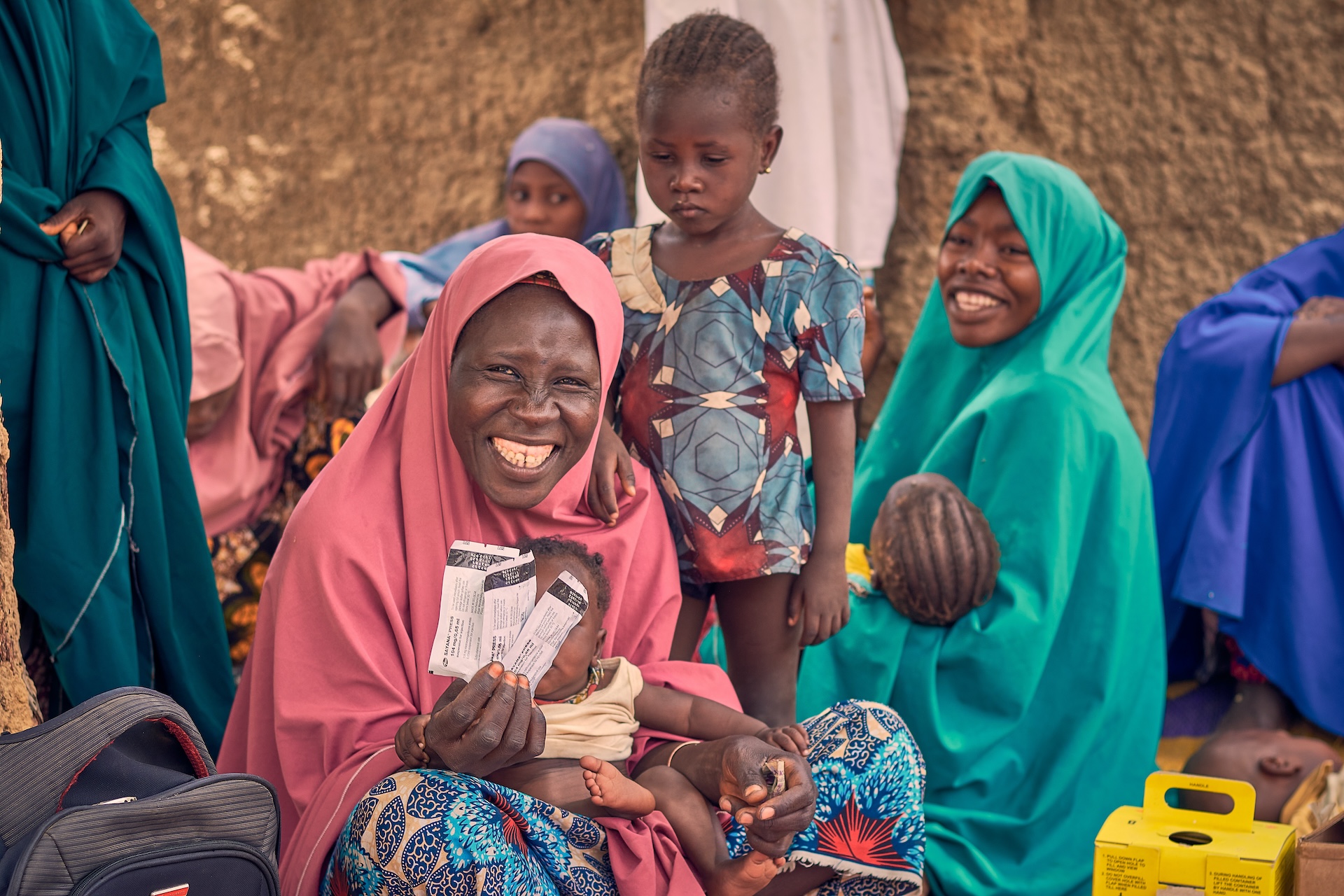
Lafiya identifies areas with high unmet need for family planning. They upskill government health workers to deliver locally tailored counseling and to provide self-injectable contraceptives (Sayana Press). They work with government to strengthen supply chains and family planning policies to fund contraceptives in the places that need them most.
The Dream
Women get state-of-the-art contraceptives as part of government primary care, allowing them to take control of their reproductive health.
Why We're In
Excellent contraceptives exist, but broken supply chains and lack of knowledge from trusted sources limit use. Lafiya is closing that gap in northern Nigeria: they’ve delivered Sayana Press to 500K women and early evidence suggests that women are adopting it long-term. They’ve also got traction on cost-sharing agreements with government, boosting their momentum. It’s early, but we’re betting this model saves lives.
Delivery
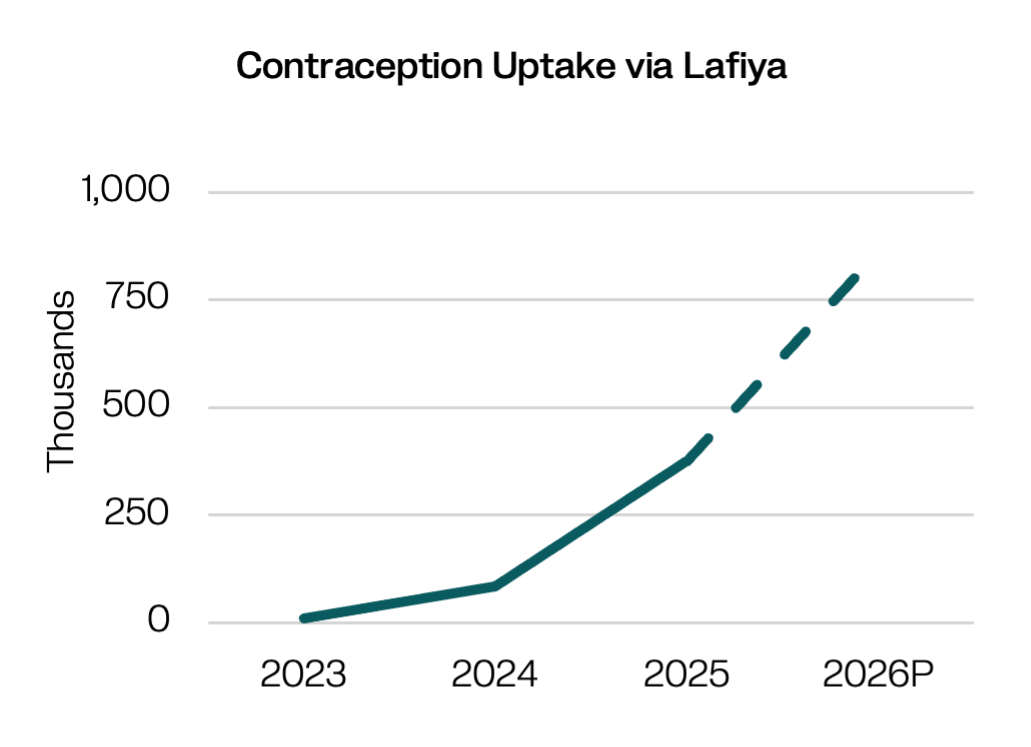
To date, Lafiya has reached over 500,000 women in Northern Nigeria, delivering more than 1 million doses of Sayana Press.
The Model
A solution that works and can scale.
High-potential areas
Use available data to identify communities with high unmet needs for family planning
Technology
State-of-the-art contraceptives, including the “Sayana Press”, a self-injectable that doesn’t require cold storage and offers protection for 3 months per doseProvider: existing government health workers trained to provide family planning counseling and contraceptives at community levelSupply chain: reliable supply chain for Sanaya Press, all the way to the last mile
Provider
Existing government health workers trained to provide family planning counseling and contraceptives at community level
Supply chain
Reliable supply chain for Sanaya Press, all the way to the last mile
Potential for Impact at Scale
Mulago uses four criteria to gauge potential for exponential impact. The model must be:
This is about impact and evidence. Global evidence shows that improved access to contraceptives could reduce maternal deaths by 29% per year . And an RCT in Malawi showed access to family planning reduced the probability of pregnancy in the 2 years after an index birth by 43.5% . Lafiya has not conducted a rigorous evaluation of their own that investigates the impact on pregnancy rates or birth-spacing but a quasi-experimental study by a 3rd party team in 2025 found 72% increase in uptake of contraceptives at endline (34% counterfactual), from a baseline of 2%. They’ve got more rigorous impact studies planned, and we should know more about their own program by next year.
This is about scope. The model needs an existing government health workforce that can have family planning and providing high-quality contraceptives incorporated into their responsibilities. The policy environment needs to allow for service delivery at the community level (not all countries let family planning services be delivered outside of clinics), and critically the supply chain must be sufficiently functional and stocked. Most conditions are present in Nigeria, though Lafiya is doing a lot to prop up the supply chain for Sayana press, and they’re exploring what other countries in Sub-Saharan Africa might have the right conditions and be a possibility for pilot expansion.
This is about whether government can deliver the model. Lafiya has shown government health workers can deliver successfully in 4 states and they’re continuing to test and refine the model as they expand to new states. Lafiya manages overarching implementation, but government staff are already doing a lot: identifying communities, design and delivery of training, and supervising Lafiya Sisters. While government plays a small role in the supply chain (they deliver the product from state-level to health facilities), without Lafiya the Sanaya Press would not make it into Nigeria, much less to communities. It’s not clear if the end-to-end supply chain is something that government could take on, though it is the end goal.
This is about what the model costs if delivered by government and whether government is willing and able to pay. Lafiya estimates it will cost the government $5.58 per client per year (4 doses of SP). If that’s cheap enough for government isn’t clear. Cost-sharing agreements for 50% of commodity costs were signed in 2 states and verbal indication that states want to take on stipends to Lafiya sisters as well. A great start but government will need to be able to take on 100% of OpEx costs eventually.
.png)
Lafiya is in R&D stage, testing the model and expanding into new regions in Nigeria.
Our Take
Though early stage, Lafiya already has persuasive evidence of sustained contractive use. They know they need a more rigorous study that looks at impact on pregnancy rates and are planning to get that work started this year. Maternal deaths are a huge problem in Nigeria, and they’ve got good momentum with government, but the primary constraint is an underfunded and unreliable government supply chain. With a lot of Lafiya involvement, government is already doing key parts of the model. But Lafiya has created a parallel supply chain for Sayana Press and integrating it fully into government systems won’t be an easy or quick fix. Cost per year isn’t very high but without knowing government target cost, they can’t design for what they are willing and able to pay. The cost-sharing agreements are strong signals of government wanting to be a payer but if they can be the payer at scale remains a big open question.
Are you a serious funder and want to learn more?
This is just a snapshot of what we know about the organization. If you're an investor or funder that might send some serious dough their way, we're always delighted to share more. Reach out and we'll connect you with the right person on our team.
*this is not monitored for funding requests.
.JPG)


.jpeg)

Ujamaa Community Resource Team (UCRT)
Lasting Land Rights for Pastoralists.