Ujamaa Community Resource Team (UCRT)
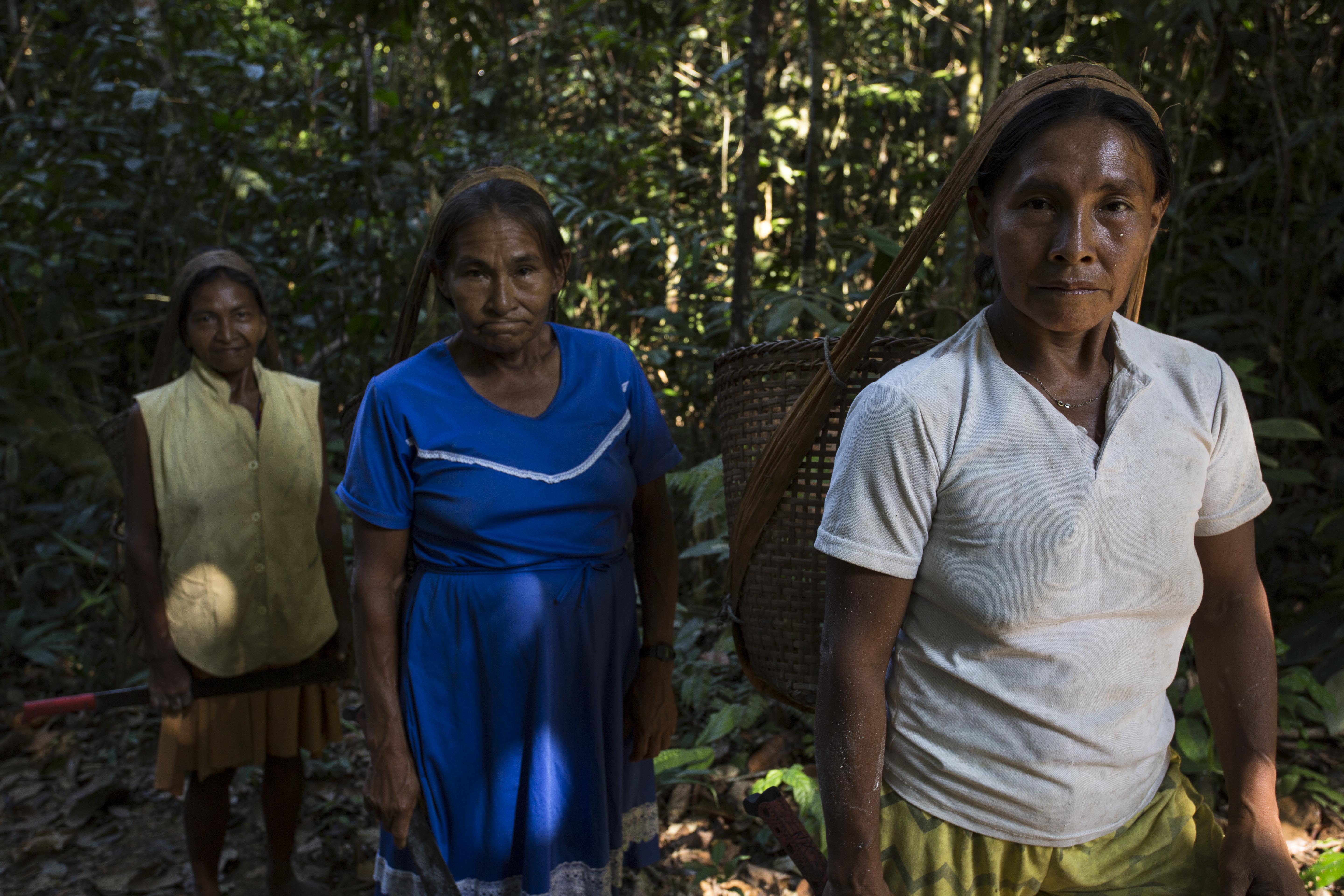
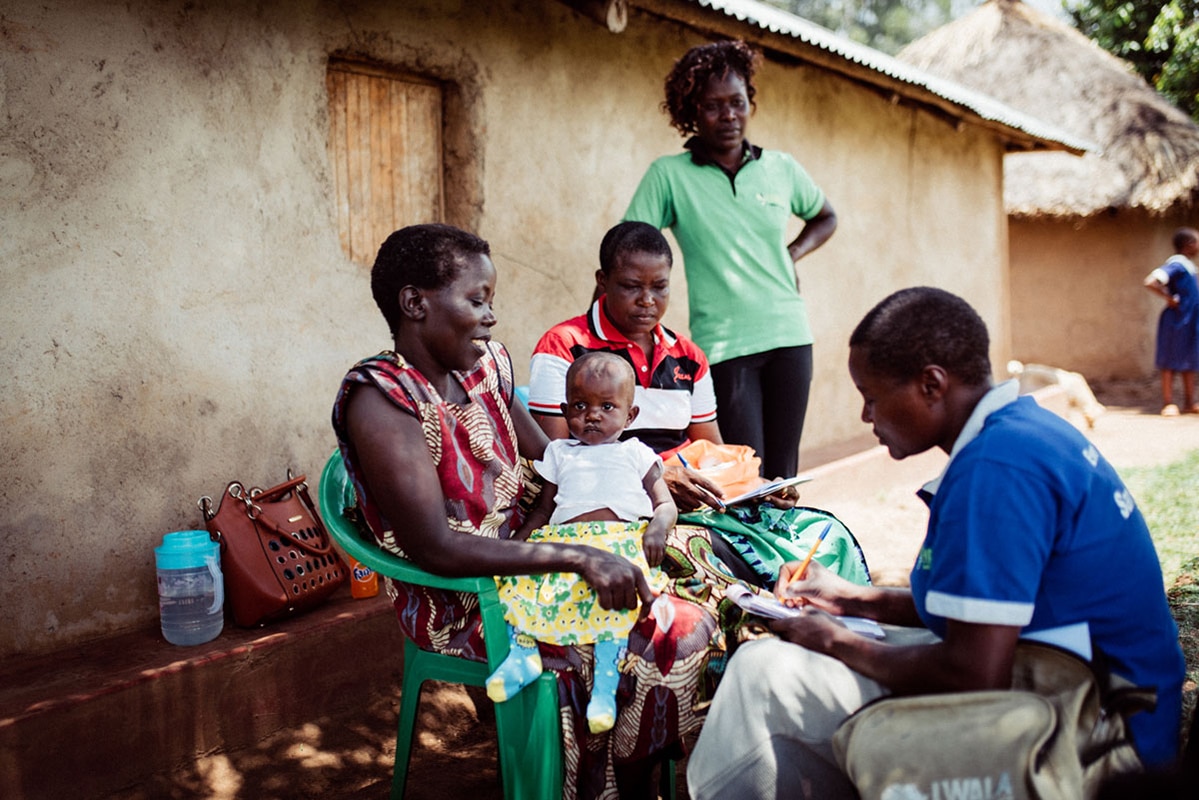
Hunter-gatherers and pastoralists still manage land communally, but their way of life and their ecosystems are under siege.
The Idea
Lasting Land Rights for Pastoralists.
Fellow
Paine Eulalia Mako
Mulago Lead
s




Total Investment
850000
Grants
0
Equity/SAFE
0
Debt/Convertible Debt
Funded Since
2022
Geography
Sector
Structure
The Mission
Thriving people in thriving ecosystems.
How It Works
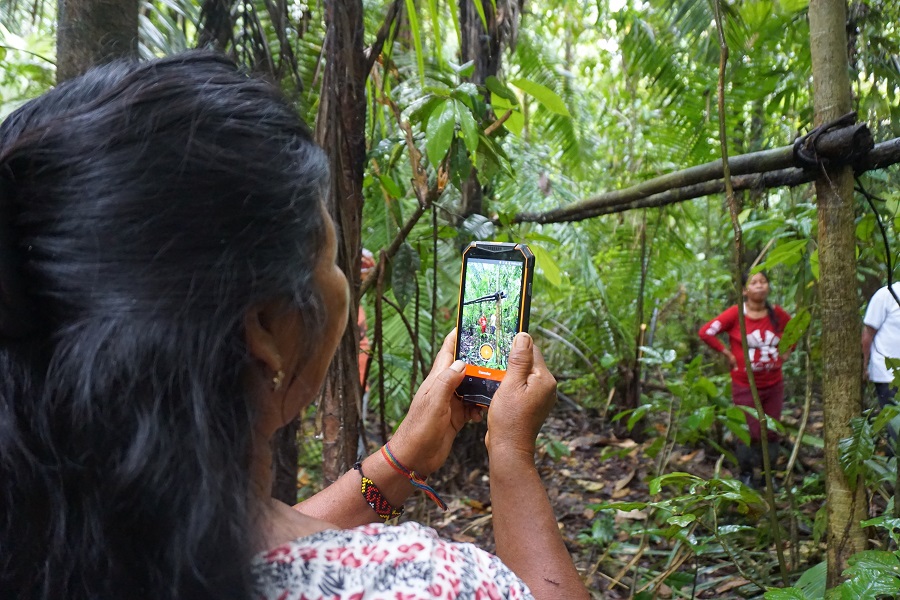
Ujamaa CRT helps communities demarcate their boundaries, get title to their lands, negotiate shared use with their neighbors, and maximize their livelihoods. Their model puts women at the center and mixes indigenous practices to manage resources (like traditional rotational grazing) with new ideas (like carbon markets).
The Dream
Ujamaa CRT’s approach is applied throughout Africa to save communal lands and the people who inhabit them.
Why We're In
A growing body of evidence demonstrates the impact and cost-effectiveness of indigenous-led conservation. Ujamaa CRT has made big gains on land rights—their special sauce—across Northern Tanzania, a place where securing indigenous tenure is particularly difficult. They’ve secured 2M hectares of communal land benefiting 650K people, and they are starting to systematically teach their approach to NGOs operating in different regions.
Delivery
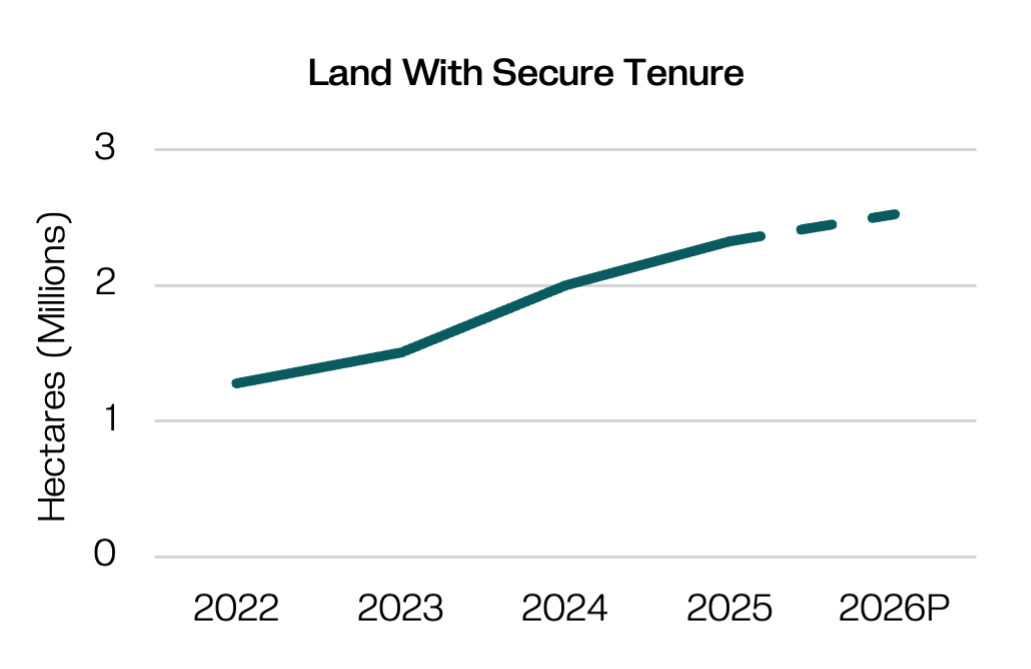
Ujamaa has cumulatively secured over 2M hectares of land in Tanzania, including over 300k in 2025 alone.
The Model
A solution that works and can scale.
Map the Landscape
Ujamaa CRT trains communities to use survey and mapping tools to capture population data, available resources, and existing and potential uses of resources in the context of a given ecosystem. Boundary agreements are then negotiated between communities.
Negotiate Shared Use
Ujamaa CRT facilitates participatory common land use planning, specifically management and governance of land and natural resources. The agreement is revisited every ten years.
Secure Land Rights
Communities then move to secure legal, collective tenure and rights over land and resources through existing national laws, including the 99-year Certificate of Customary Right of Occupancy (CCRO). This process to map, negotiate, and eventually secure land rights takes about a year.
Maximize Livelihoods
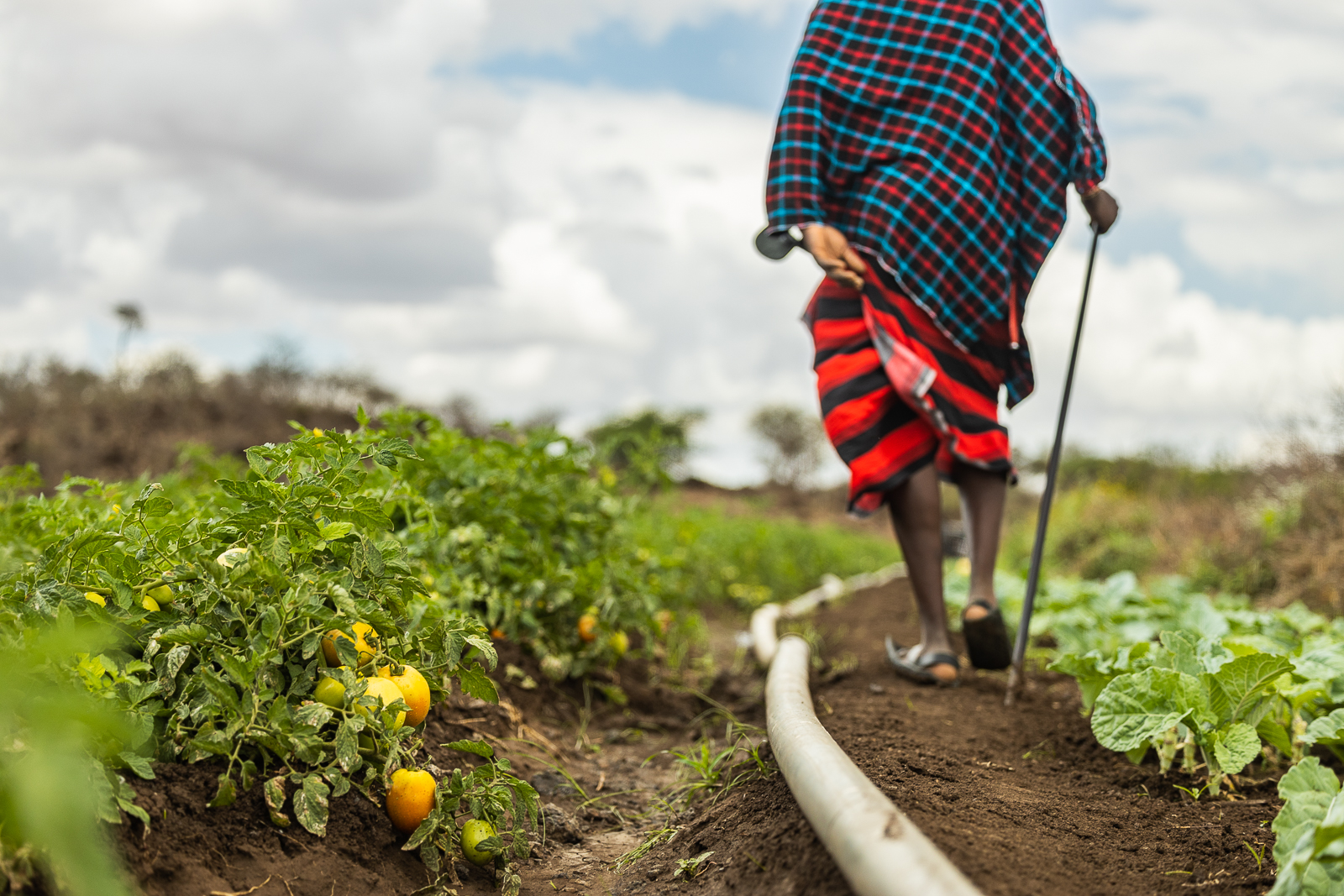
Existing livelihoods (livestock, hunting and gathering, etc.) are preserved and additional nature-first livelihoods are co-developed with communities (tourism, carbon, microfinance etc.).
Potential for Impact at Scale
Mulago uses four criteria to gauge potential for exponential impact. The model must be:
This is about impact and evidence. 2M+ hectares of communal land has been secured by Ujamaa CRT under Tanzania’s customary land law (0.3M in 2025), with nearly 1M hectares gazetted for permanent legal protection. This is over 70% of communal land in northern TZ. For livelihoods, ~$700,000 in revenue was generated by communities in 2025 mostly through carbon and tourism. They do not yet have rigorous evidence of income increases at the household level. On ecosystems, satellite imagery and ground truthing shows a 2-3x reduction in annual loss of natural vegetation to cropland, vs. adjacent regions since 2013 .
This is about scope. 55% of communal land is still to be secured in Tanzania (0.6M hectares in Northern TZ + 2.5M Ha in the rest of TZ). Northern TZ where Ujamaa CRT operates, supports 0.5M hunter gatherers and pastoralists. The model is constrained by the availability of capable NGOs and livelihood options in each geography. The political situation in Tanzania and the threat of land grabs continues to be a major constraint. Despite a political thaw in 2024, the past year saw the region back slide.
This is about whether NGOs can deliver the model. Currently, Ujamaa CRT is the primary doer. The model is specialized and adapted based on community conflicts, size of villages, landscapes, and cultures. In 2025, Ujamaa CRT partnered with Mali Kale, a CBO in Central Tanzania, to deliver in a new landscape. This year, Mali Kale will lead delivery in 4 more villages with Ujamaa CRT support. Ujamaa CRT has also documented a playbook to recruit and train more doers. The first iteration will be released in 2026.
This is about what the model costs if delivered by NGOs and whether customers are willing and able to pay. The current cost to Ujamaa CRT is 1) upfront, first-year cost to secure land of $0.30/hectare for the largest villages up to $6/hectare for the smallest villages, and 2) recurring costs of $0.20/hectare up to $4/hectare (for 3-4 years). Major cost drivers include training, mapping tools, staff salaries, monitoring, and vehicle purchases. More precision is needed to calculate recurring costs over time and for other doers.
.png)
Ujamaa CRT is in early-to-mid growth.
Our Take
Ujamaa CRT have secured millions of hectares of land across Northern Tanzania. That’s persuasive especially in a turbulent political situation. What they need is rigorous evidence around landscape health and livelihoods. They’re in early growth and they’ve trained another doer to deliver in a different landscape for the first time. That and the replication playbook are wins. But there’s still a lot to learn if there are enough doers who can replicate. While we also have better estimates about recurring costs, it needs to be priced to what payers can afford especially with a growing budget gap.
Are you a serious funder and want to learn more?
This is just a snapshot of what we know about the organization. If you're an investor or funder that might send some serious dough their way, we're always delighted to share more. Reach out and we'll connect you with the right person on our team.
*this is not monitored for funding requests.