
Mati Carbon
Smallholder farmers across the Global South are caught in a trap: years of synthetic fertilizer use have acidified their soils, making those same fertilizers less effective. Degraded, acidic soil means declining yields — and declining incomes.
The Idea
Rock Dust Soil Additive for Smallholders
Fellow
Shantanu Agarwal
Mulago Lead
s



Total Investment
350000
Grants
0
Equity/SAFE
0
Debt/Convertible Debt
Funded Since
2024
Geography
Sector
Structure
The Mission
Increase smallholder farmer income
How It Works
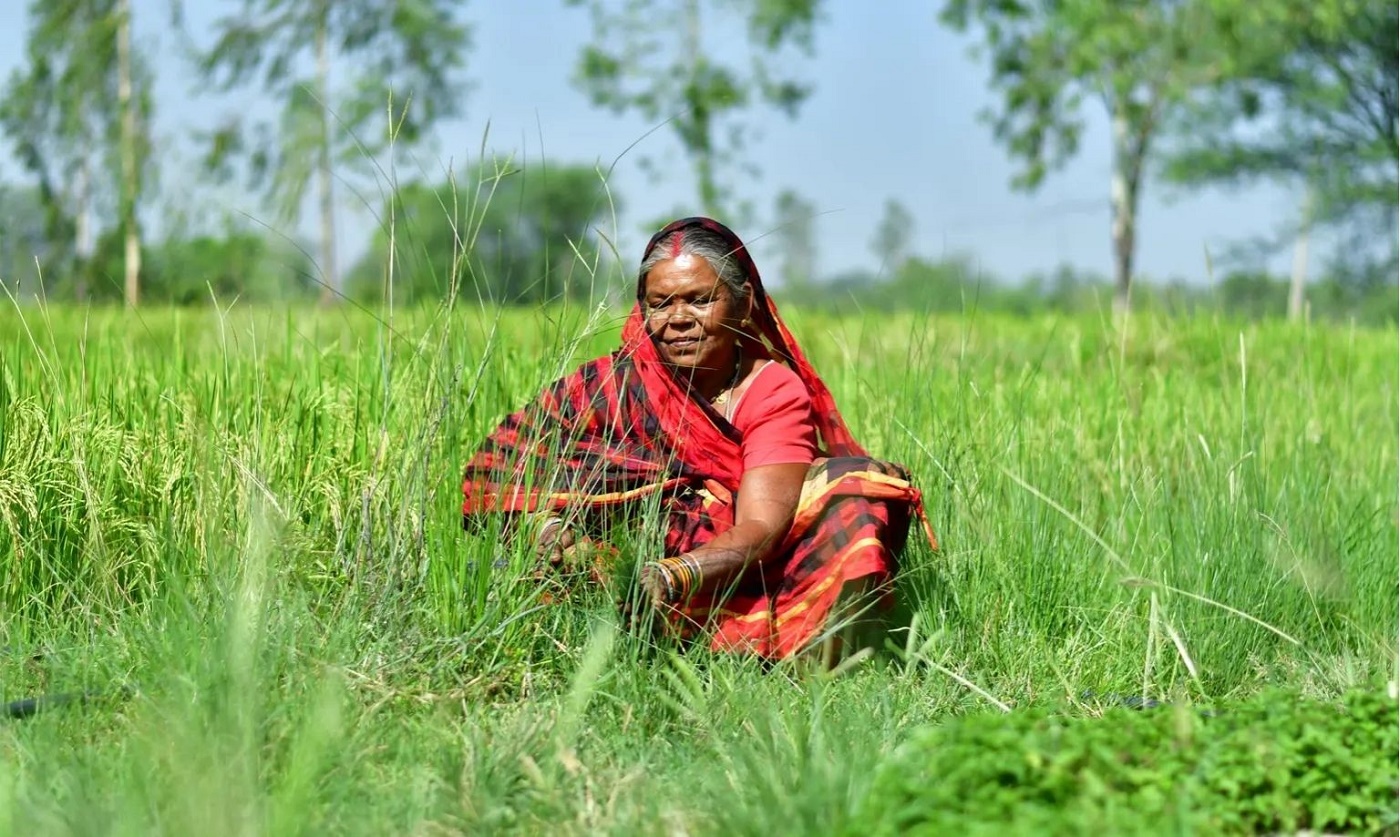
Mati finds places where rock quarries are near poor farmers, tests soils to confirm who'd benefit, and delivers rock dust for farmers to spread on their fields. The rock dust weathers into the soil, sequestering carbon and improving the soil. They monitor closely to verify that's happening — which unlocks carbon credit payments that fund the whole thing. Farmers get the soil amendment for free, yields go up, fertilizer dependence goes down, and as a result they make more money.
The Dream
An industry of enhanced rock weathering businesses that use Mati’s tech, in exchange for making sure the rock dust makes it onto smallholder farmland.
Why We're In
Enhanced rock weathering (ERW - spreading crushed basalt on farmland to sequester carbon and restore soil fertility) has been proven on commercial US farms, and Mati's chief scientist helped run the seminal trial. But Mati is the first to try it with smallholder farmers. They've deployed across 18,000 acres in India with ~23% yield increases on rice paddies, and early work in Africa suggests the most degraded soils benefit even more.
Delivery
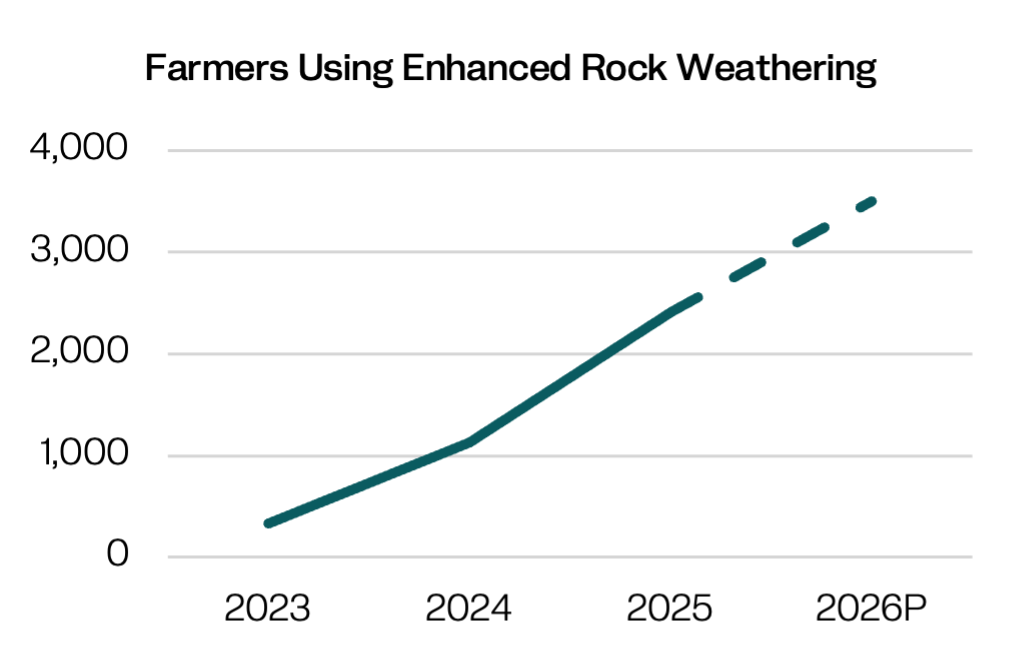
Mati has grown quickly from initial pilots in 2022 to 3,500 farmers across India, Zambia, and Tanzania by early 2026.
The Model
A solution that works and can scale.
Find and onboard farmers
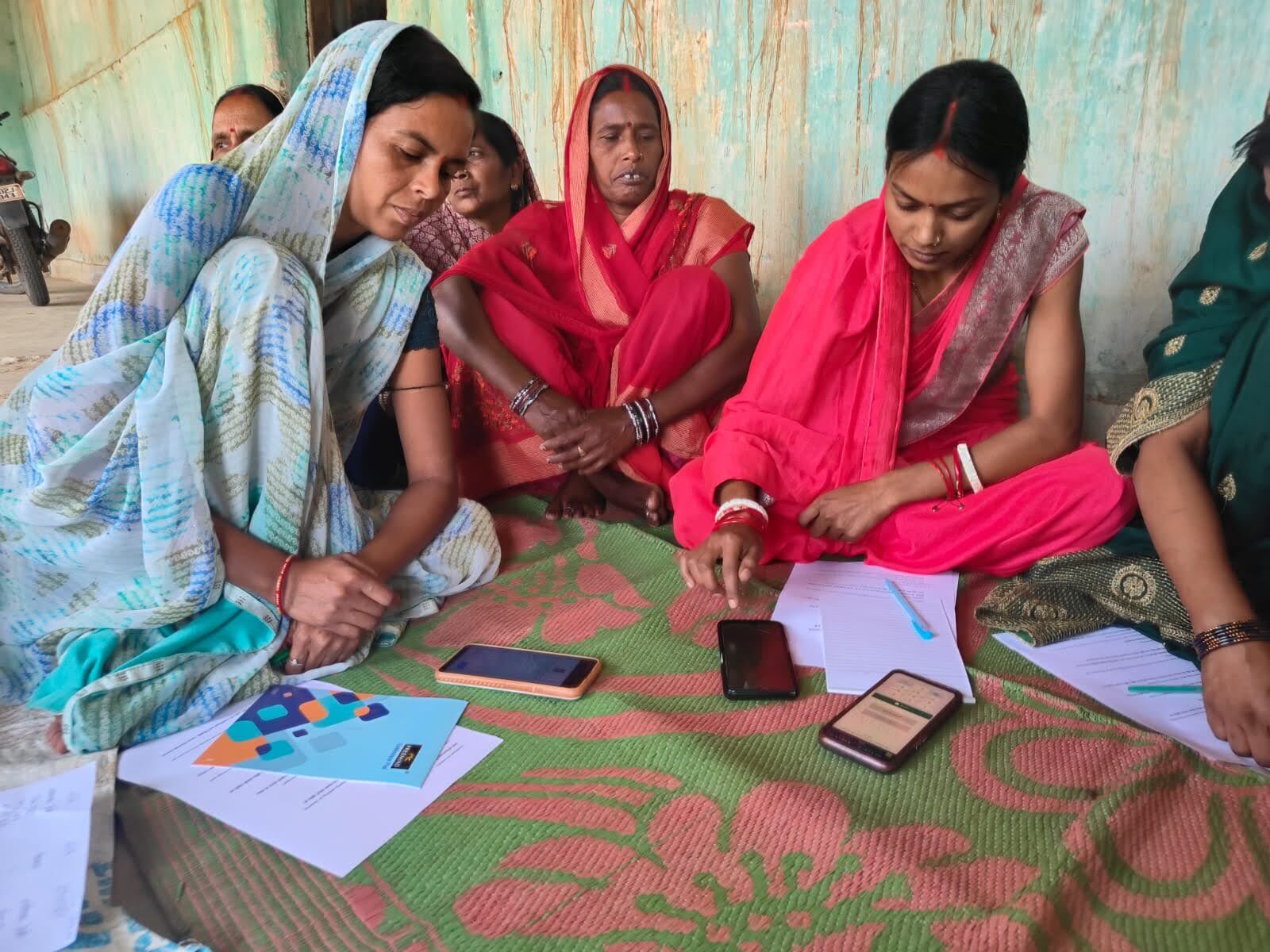
Identify areas where rock quarries and smallholder farms overlap, recruit farmers through cooperatives and community meetings, and use early adopters as demonstration plots with side-by-side comparisons.
Test Soils
Collect soil samples to confirm which farms would benefit from rock dust and establish a baseline for ongoing monitoring.
Source and deliver rock dust
Collect rock dust from local rock quarries and transport it to farms for farmers to spread on their fields.
Monitoring, Reporting, and Verification tech stack
Build tech to integrate soil sampling, geochemistry, hydrology modeling with satellite monitoring to quantify and certify carbon removal.
Sell Carbon credits
Sell verified carbon credits to corporate buyers, with a portion of revenue shared back to farmers
Potential for Impact at Scale
Mulago uses four criteria to gauge potential for exponential impact. The model must be:
This is about impact and evidence. A controlled trial on rice paddies fields in India across 2,000+ acres showed a median 23% yield gain. In Africa, where soils are more degraded, early internal evidence on maize suggests even stronger gains — which tracks with the seminal US maize study co-authored by Mati's chief scientist, which found 12–16% yield gains with the strongest results on the most degraded soils. Their internal data collection in Africa is structured to learn quickly but the Africa is pre-verification, so the climate results aren't yet known. But the India yield evidence is compelling, and Mati has already sold carbon credits there — so we're cautiously optimistic the same will hold on the continent.
This is about scope. About 200 million smallholder farmers could benefit from ERW—roughly 40% of smallholders are in areas with the right conditions (hot, wet, basalt nearby). Mati’s identified ~35 viable countries where ERW could and should be verified. The carbon market is big: ERW is one of very few carbon removal approaches that can theoretically scale to gigatons. Constraints: ~25% of soils don’t respond well, you need proximate basalt sources and the quarries that exist in the areas we care most about have limited capacity.
This is about whether businesses can deliver the model. Right now, Mati’s team is doing all direct implementation. They replicated to six sites across India, training new teams each time, and they're learning a lot about making this simple enough for other businesses to do. In early 2025, they launched their first farmer entrepreneur to handle farmer-facing operations — spreading rock dust, doing field visits, collecting soil samples for carbon validation in India. The bet is that these entrepreneurs can do the farmer ops well while Mati focuses on building the monitoring, reporting, and validation (MRV) tools that work for other businesses — not just Mati. But it’s early days.
This is about whether carbon buyers arewilling to pay — and so far, signals are strong. Mati's sold over 10,000 tonsof verified removal credits to buyers like Stripe, McKinsey, Siemens, andShopify. Now Mati's job is to prove that every ton harvested can be done profitablyand are aiming to reduce their cost per ton produced from $300+ to $100.They're driving costs down but are keeping their eye on maintaining margins so Mati,the farmer entrepreneurs and the farmers make more money, otherwise no one willcopy the idea.
.png)
MatiCarbon is in early Growth — they've replicated the model across six sites in India, launched three more last year, and are mid-pilot stage in Zambia and Tanzania.
Our Take
Mati's in early Growth and building fast. The yield data from India is compelling enough to keep going. The addressable market is massive — roughly 200 million smallholder farmers in viable geographies — and they're learning more about where the model works best with each new site. The outsourced farm operations just launched so it's too early to know if these elements are truly simple enough for farmer entrepreneurs to oversee, and the MRV is built today for Mati to optimize their business — not necessarily for others to use. Each new agroecology zone takes serious investment to complete the scientific and climate impact of rock weathering in that region, but Mati is riding $50M of XPRIZE philanthropy to grow themselves into enough new zones that the technology platform could eventually be used everywhere. The big bet: They need to get the unit economics right for farmers, farmer entrepreneurs and Mati for this to go big. And, that ERW credits continue to demand a price premium in the market while they drive the costs down.
Are you a serious funder and want to learn more?
This is just a snapshot of what we know about the organization. If you're an investor or funder that might send some serious dough their way, we're always delighted to share more. Reach out and we'll connect you with the right person on our team.
*this is not monitored for funding requests.
.jpeg)