The 90% Health System
Transforming three stops along the patient journey to fix primary healthcare.
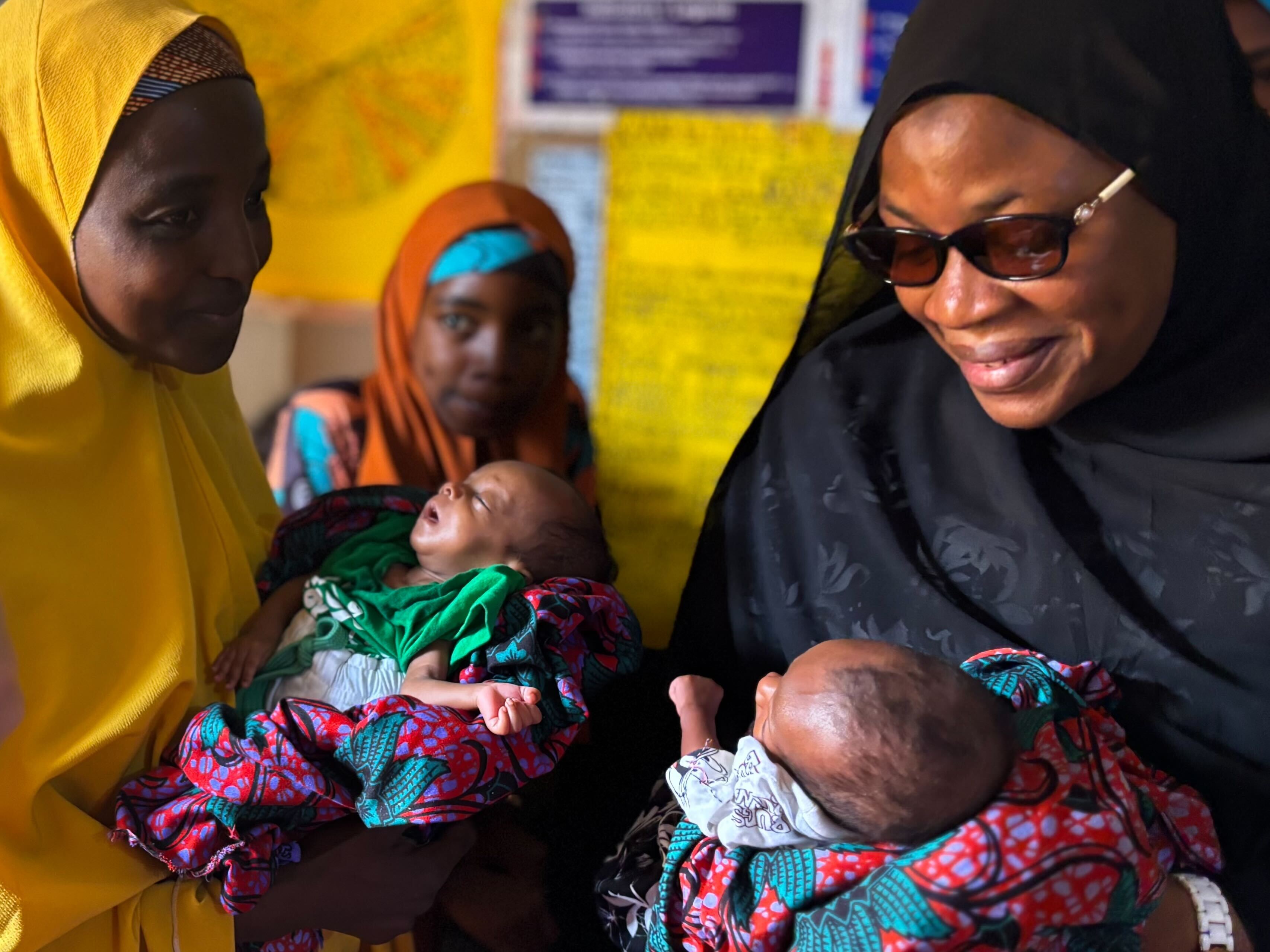
If you’re poor in Africa and in need of primary healthcare, chances are you’re going to end up spending a lot of time, effort, and money — all of which you don’t have much of — to even get a shot at decent care. And still, you might end up worse off than you started because the deck is stacked against you. Despite heartening progress through the years, primary healthcare is still broken in Africa.
The status quo model - let's call it Primary Healthcare 1.0 - was never going to work. There’s not enough money. Sub-Saharan African governments spend tiny fractions of tiny budgets on healthcare, on average ~5% of GDP. And, Big Aid created massive distortions. Big Aid built programs focused on diseases (e.g., malaria, HIV) rather than health systems, resulting in fragmented care and weak state capacity, shifting power away from governments and their citizens.
So now that Big Aid is over, for the most part, the design challenge is not how do we resuscitate the old, wheezing model. It’s much more audacious - design comprehensive care that works starting from the actual constraints.
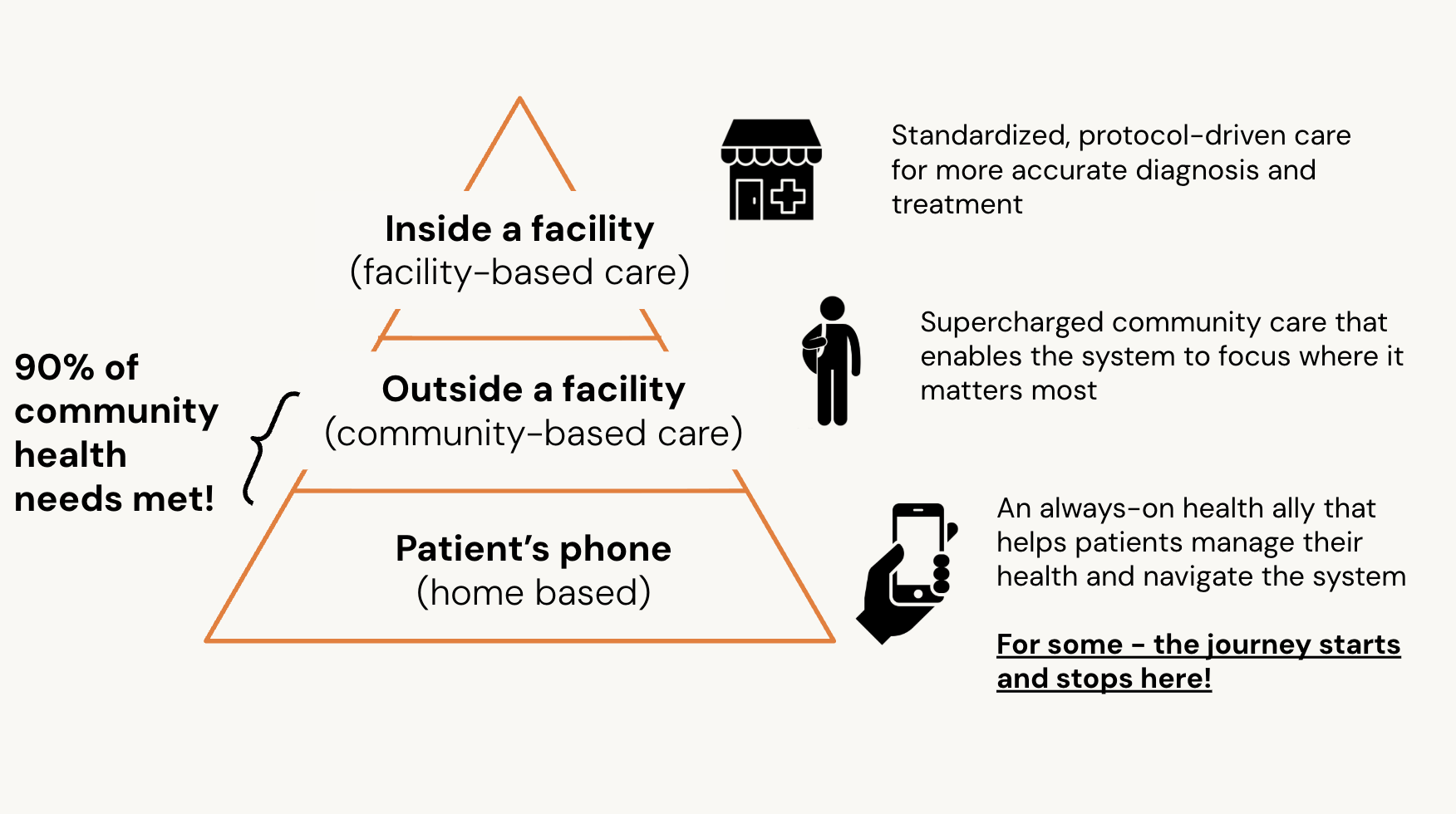
We think the future of primary healthcare in Africa depends on reimagining how care is delivered at three critical stops in the patient’s journey: the patient's phone, outside the facility, and inside the facility. If we get those three stops right — and get them working in concert — we might have a shot at flipping the current top-down healthcare model on its head. Home and community-based care, supported by digital tools and AI, could take on 90%+ of the community’s healthcare needs if done right.
That would be a big shift away from the old approach of getting patients to care to a health system that brings care to the patients. Care becomes proactive, distributed, and people-centered. And, crucially, it becomes cheap enough for governments and patients to afford. That last bit matters. A lot.
Insufficient public spending and Big Aid related distortions are only part of the Primary Healthcare 1.0 story. Another important chapter of the story has been learning that copying rich-country healthcare models does not work. Rich country healthcare models have plenty of doctors and specialists, strong tax bases and insurance systems, reliable infrastructure, and high government spending. When you superimpose a system with those conditions on poor countries in Africa, you end up with: an overinvestment in hospitals, neglected community and rural care, unrealistic staffing models with undertrained, absent staff, and fragmented insurance schemes with high out-of-pocket spending (on average ~35-40% but can go up to 70% in places like Nigeria). That’s basically like installing air conditioning in a house with no roof.
These top-down health systems are ineffective and expensive. Patients end up bearing the brunt of the costs. One of the most important lessons this reveals is the need to ruthlessly design for context and therefore cost.
The Patient Journey Reimagined
This brings us to the opportunity that exists today. I’m no subscriber to technotopia wonderlands, despite being in Silicon Valley, but I do see a window. We are at a historical crossroads - as one world-shaping system sunsets thanks to the US Government’s callous and irresponsible dismantling of USAID, an AI revolution is on the rise. Therein lies an opportunity and perhaps a light at the end of a very dark tunnel.
African health ministries are rethinking their future and how they meet their mandate in this mostly post-Big Aid world. And AI — both today’s version and tomorrow’s versions — could help jumpstart the primary care engine anew.
At Mulago, we’ve worked for years with health leaders building primary care models across Africa and beyond, and we’ve recently been talking with top health funders, including our friends over at Emerson Collective and the Agency Fund, about what comes next. The question we keep asking is simple:
How can technology help us design an ultra-low-cost, high-quality primary healthcare system that reaches the most people? In other words, what could Primary Healthcare 2.0 look like, and what would need to happen to make it better, simpler, and cheaper?
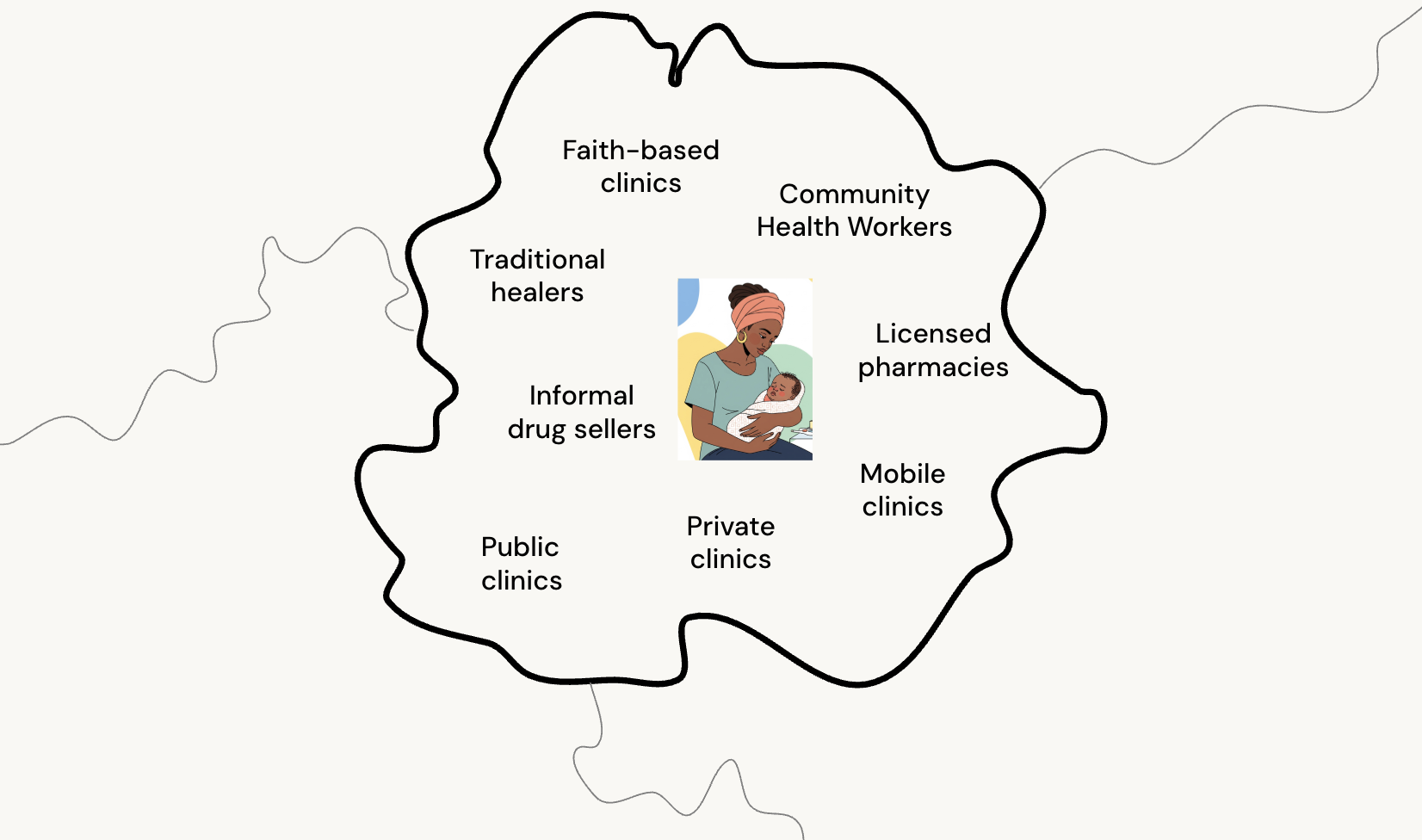
Currently there are many, way too many, different and unreliable entry points for people seeking care. Most of the time, that first point of entry sends people down the wrong path, resulting in a series of costly and consequential dead ends. But despite the myriad permutations of providers and touchpoints of care, they can all be sorted into three stops along the patient journey.
Stop 1
The Patient’s Phone: Digital Self-Service Care
Today and in the near future, a patient with a smart-ish phone can be much more proactive and informed about their health sitting at home or at work.
This does not mean every patient suddenly has a doctor in their pocket, or that AI can safely handle everything. But it does mean that care can be streamlined, decongesting the healthcare system and routing patients to the right place at the right time. A phone can become an always-on health ally: helping someone understand symptoms, know when and where to seek quality care, avoid dangerous delays, adhere to treatment, manage chronic conditions, and navigate the health system from start to finish.
One example of this is Pinky Promise in India. They have an AI-powered chat-based platform that can diagnose and treat over 300 common reproductive and gynecological concerns. Staff gynecologists verify and sign off on treatment plans, but their throughput goes from what would typically be 20–30 patients a day to 200+ patients a day. It’s free for initial questions and $1.20 for diagnosis and a treatment plan, plus a 24-hour window to keep talking to the doctor. That’s 10% of the market price for a standard gynecologist visit in India.
Another example is Jacaranda Health in Africa. They have an AI-powered, 2-way SMS chat for expecting and new mothers. Their evidence-based content spans the spectrum of care that engages mothers at critical milestones, offering content in multiple local languages that gives advice on pregnancy and danger signs and sends reminders about pre and postnatal visits and immunization. AI plays a key role for triaging and screening mothers for risk, with trained clinical nurses in the loop to ensure quality and support. The data they collect feeds into government-managed dashboards to improve decision-making and resource allocation. It currently costs ~$2.50/mother and are on track to reduce costs to ~$1.50/mother based on reduced compute, messaging, and enrollment costs.
Stop 2
Outside the Facility: Community-Based Care
There are many providers who exist outside the facility or clinic, like traditional healers, unlicensed drug peddlers, and mobile clinics. But the main horse we’re backing is the professionalized Community Health Worker (proCHW) because they function as an extension of the existing government systems rather than a parallel one. Mulago has long invested in proCHW models, like Muso and Integrate Health, and continues to support the Community Health Impact Coalition. They’ve made a ton of progress getting healthcare into communities and have rigorous data to back it up. CHIC and their members are pushing for governments to pass national policies that ensure CHWs are salaried, skilled, supervised, and supplied.
AI and the resulting improvements in tech has a potentially huge role to play in making that proposition more attractive and achievable.
A proCHW can do that much more to deliver quality care when powered with AI-enabled scribing, protocol coaching, translation, and diagnostics. Real-time decision checks could catch dangerous mistakes, flag when patients fall off track, and help supervisors focus their time where it matters most.
The point of the tech is not to replace CHWs but to supercharge them. AI cannot replace the trust, relationships, and contextual knowledge that community health workers have. In the best version of this future, tech strengthens the human layer of the health system instead of bypassing it.
Stop 3
Inside the Facility: Facility-Based Care
This refers to everything from informal drug shops to licensed pharmacists to nurses in local public and private clinics. There are a lot of public and private community facilities in Africa, but most offer mediocre care. At their worst, they provide inaccurate information and counterfeit medications. However, when managed properly, a well-run clinic or pharmacy can take on a lot more of what comes through the door.
OneDay Health gives us a glimpse of what this can look like. They use AI to map out where the healthcare “black holes” in Uganda are and set up barebones clinics in, you guessed it, one day. They deploy trained nurses to staff them who use standardized protocols to treat 30+ conditions representing 95% of the disease burden. Patients pay ~$2 for a visit.
In this scenario, the quality of care hinges almost entirely on the nurse’s adherence to protocols, which is where AI enters the picture. OneDay is piloting a WhatsApp-based AI chatbot that draws from their clinical protocols to guide nurses through flow-chart diagnostics while also supporting treatment adherence, triage, and clinical decision-making.
Sehat Kahani in Pakistan offers another version: upgrading underused government community clinics with telemedicine, digital tools, and nurse- or midwife-led care, with operating costs paid for by the government. They are now moving toward AI models that analyze consultations and audit protocol adherence.
This is where AI could become the care engine: running the clinic’s back office, standardizing care, improving quality, and helping local providers deliver cheaper primary care at scale.
What Could Go Wrong
There is a lot to be optimistic about. There is also a lot to be careful about. We don’t want to repeat the mistakes of the past, which is haunted by failed pilots, duplicative tools, and fragmented investments. The best organizations are thinking about these things:
Government integration is hard.
Tech that works at small scale often stalls when it’s time for the big leagues: government integration, where implementers have to contend with legacy infrastructure, political dynamics, and procurement hurdles.
Design with government, not in parallel.
Co-creation is good design 101. AI tools cannot be built in parallel to the health system and then magically dropped in. They have to be designed with the people who will use them and the governments that may ultimately pay for them. As our good friend Nithya Ramanathan (the founder of Nexleaf) says: “No more of these transitions to government.”
Data quality remains a constraint.
AI is data-hungry and reinforces the maxim Garbage In, Garbage Out. Health data across Africa is often error-prone, siloed, and poorly digitized. County-level data infrastructure in many settings is not ready for prime time.
Recurring costs are an orphan problem.
Who pays for ongoing maintenance and development? Will governments in Africa fund these tools long-term? There is no clear consensus yet.
And then there are safety, standards, and accountability gaps. Regulation can’t keep up, so tool developers must build in guardrails. But if an AI tool causes harm, who is responsible?
These are not small concerns and organizations need to think about them from the outset so we don’t end up with another wave of shiny pilots that go nowhere - or worse, cause harm.
What Funders Should Look For
There’s going to be a flurry of new ideas hitting funders' inboxes that will be harder than ever to sort through. The opportunity is not to fund every AI-for-health tool with a nice demo. The big opportunity is to find and fund the ideas that supercharge one or more of these stops along the patient journey in ways that make care ultra-low cost, high quality, and provide widespread coverage.
That means backing models that make citizens more capable, community health workers more effective, and nurse- or pharmacist-led clinics more reliable. It means looking for tools that help the whole system work better, not one-off tech panaceas. It means asking who pays, who uses it, who maintains it, and whether it strengthens or fragments the health system further.
If we get this right, Primary Healthcare 2.0 could be radically different: more proactive and more affordable, handling most of what communities actually need before an expensive doctor or hospital ever enters the picture. That is the light at the end of the tunnel: a new model of primary care, designed from the constraints up.
Impact in your inbox
The best stuff we run into, straight to your inbox. Zero spam, promise. To see past issues, click here.

Scale Really Matters
The problems are big, the time is short, and the resources are limited.

April 16, 2026
There Is No Such Thing as Impact Investing
There is philanthropic investing, and there is commercial investing, and there is nothing in between.
December 11, 2025
.png)
Big Aid Is Over
We need to design for what African governments can do and will pay for.
May 21, 2025