Foundation for Ecological Security (FES)
25% of India’s land—with 350M of the rural population—exists as a commons. They’re not well managed. Forests, pastures, and waters end up degraded.
The Idea
Community-Led Management of Village Commons
Fellow

Jagdeesh Rao Puppala
Mulago Lead
s




Total Investment
2500000
Grants
0
Equity/SAFE
0
Debt/Convertible Debt
Funded Since
2017
Geography
Sector
Structure
The Mission
Conserve village commons in India.
How It Works
FES has reimagined the tragedy of the commons as the promise of the commons. They help villages secure tenure, access government funding, restore the land, and manage it collectively through local government. Their technology products 1) help them—and increasingly local government administrators—implement the model and monitor results, and 2) create a platform for multiple stakeholders to participate in commons management.
The Dream
The Indian government uses the FES model to conserve commons across the country.
Why We're In
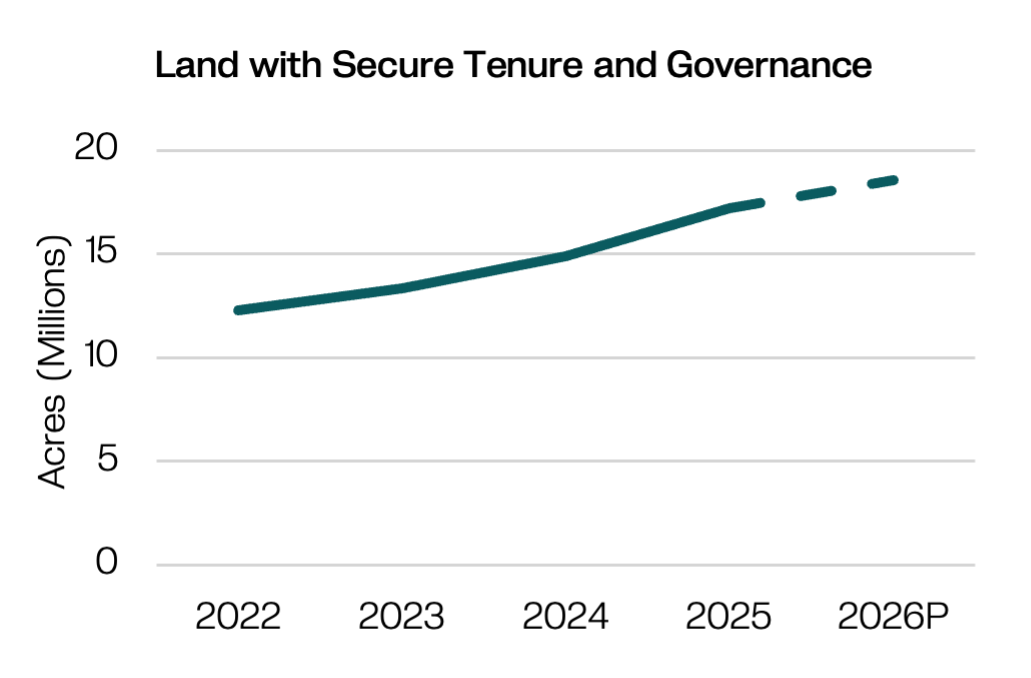
The model works. FES has demonstrated a 65% increase in standing biomass in degraded landscapes, and they think the model could work across 240,000 villages and 65M hectares. At a cost of $500/village, it’s cheap, and the government has the money and willingness to pay. FES has become an acknowledged leader in commons management and has spurred a national collective.
The Model
A solution that works and can scale.
Community Mobilization
Organize village communities in concert with local government
Shared Tenure
Secure legal rights to shared land
Efficient Restoration
Develop and implement restoration/management plans that integrate economic use
Government Funding
Access existing government funding for land restoration and local employment
Integrated Data
Establish data systems for management and evaluation, and integrate into government
Potential for Impact at Scale
Mulago uses four criteria to gauge potential for exponential impact. The model must be:
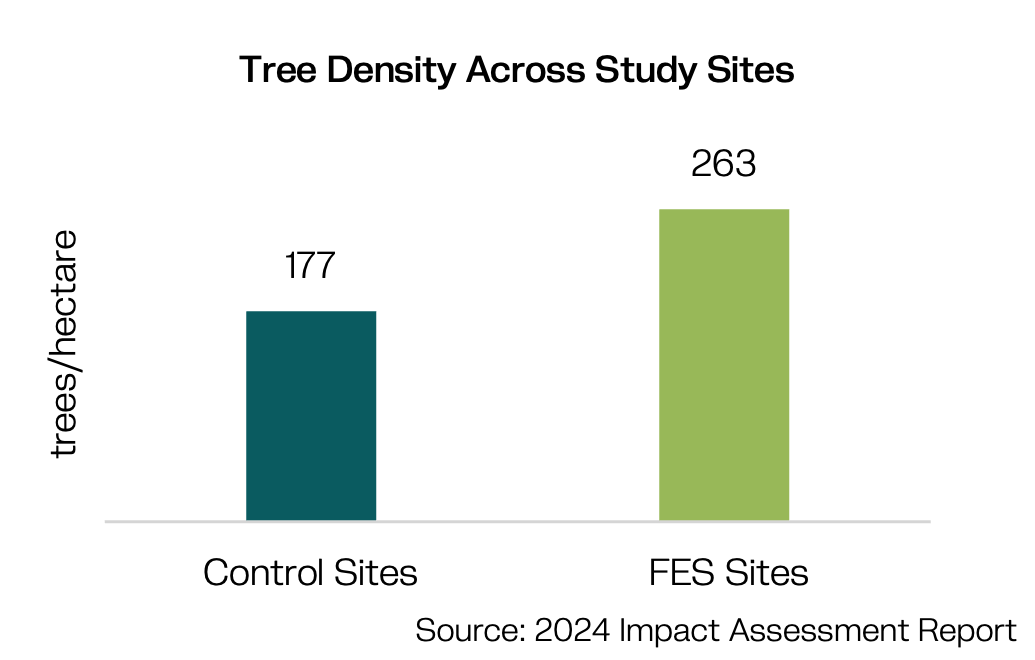
This is about impact and evidence. FES has a strong body of evidence from longitudinal, third-party studies. Over decades, they demonstrate 65% increase in standing biomass in degraded landscapes compared to untreated villages). They see 15-20% biomass increase after 3 years and 25% after 5 years. Groundwater improves 10% pre-monsoon and 5% post-monsoon. They have ongoing monitoring of 138 sites in partnership with academics, supplemented with remote sensing. They're less certain about household income attribution given the comprehensive nature of the intervention, though data suggests 30-40% income increases due to better agricultural productivity and livestock production.
This is about scope. 25% of India exists as commons, supporting 350 million of India's rural poor. FES works across 12 states and could expand further. Conditions needed: functioning local government, legal tenure laws and enforcement, villages with rainfed agriculture and dependence on local agriculture or forest products. Constraint: ecosystems must be intact enough to restore but threatened enough to need it.
This is about whether government can deliver the model. Government and partners are successfully replicating with FES support. FES embeds teams at local and state levels (Project Management Units) to ensure quality implementation, but most work is done by state and local officials. Digital dashboards co-designed with government in Karnataka, Andhra Pradesh, and Chhattisgarh enable real-time monitoring.
This is about what the model costs if delivered by government and whether government is willing and able to pay. Marginal cost is $500 per village. Total cost including community payments is $11,500 per village—government pays the majority through central rural employment schemes. FES has leveraged $510 million in public investment, proving government willingness to pay; however, recent changes to long-standing rural subsidies may threaten this funding, and force states to contribute more funding directly.
.png)
FES is Scaling. They've proven government can deliver the model, and are now focused on deepening implementation quality and expanding to new states with less capacity. They also need to continue policy work to embed the solution in government operations, to do more without their team’s help.
Our Take
FES is in Scaling. They've built a systematic model that government delivers with embedded support. The evidence is strong on ecological impact – some of the strongest in the field over a long period of time. We’re less certain on durable household income, but the theory of change here is sound. It’s cheap enough—government already pays. Their technology accelerates adoption, and provides government staff with cutting edge monitoring and reporting tools. The critical question: can they reduce the lift required from FES staff as they expand to new states with less government capacity?
Are you a serious funder and want to learn more?
This is just a snapshot of what we know about the organization. If you're an investor or funder that might send some serious dough their way, we're always delighted to share more. Reach out and we'll connect you with the right person on our team.
*this is not monitored for funding requests.